
Key Takeaways
- Kansas law does not require a DCF report solely because a pregnant woman uses substances, and engaging in treatment supports family preservation rather than triggering removal 5.
- Methadone and buprenorphine are the first-line standard of care for opioid use disorder during pregnancy, endorsed by CDC, SAMHSA, ACOG, and ASAM over tapering or self-detox 6, 2.
- Safe care in Kansas requires programs with MD, APRN, and RN staffing that coordinate directly with your OB, plus awareness of alcohol or benzodiazepine withdrawal risks that can cause seizures.
- A confidential intake call covers substance use, gestational age, OB coordination, co-occurring conditions, and payment options, with Kansas resources like SBIRT available if Medicaid is your coverage 11.
Medical Evidence: Quitting While Pregnant
If you’re pregnant and using substances, taking the step to seek information is significant. It’s crucial to understand that for opioid use, attempting to quit on your own can be more dangerous than seeking medical help.
A review of opioid use disorder in pregnancy highlighted that medically assisted withdrawal, even when supervised, is associated with high recidivism rates (59–90%) and fetal intolerance 1. This isn’t a matter of willpower; it’s about the physiological interaction between opioid dependence and pregnancy. Withdrawal symptoms in the mother can trigger fetal distress, and in some cases, lead to miscarriage or preterm labor.
The Centers for Disease Control and Prevention (CDC) explicitly states that medication for opioid use disorder (MOUD), typically methadone or buprenorphine, is preferred over tapering or withdrawal management during pregnancy 6. This is not a secondary option but the primary, first-line recommendation based on medical evidence.
Therefore, if you’ve been considering detoxing alone, the medical consensus advises against it. The safer path involves maintaining stability with the support of a medical team that can manage both your health and your pregnancy simultaneously, regardless of how far along you are.
You don’t need a complete plan right now, just the commitment to not face this challenge alone.
Kansas Law: Reporting and Child Custody Concerns
A common fear that prevents pregnant individuals from seeking help is the concern about child protective services. It’s important to address this with accurate information about Kansas law.
Kansas does not have any statute or regulation that mandates a report to the Department for Children and Families (DCF) simply because a pregnant woman is using substances. This guidance comes directly from the Kansas Perinatal Quality Collaborative’s materials for providers 5. Being pregnant and using substances is not, in itself, a reportable event under Kansas law.
Practically, this means that contacting a treatment center, starting MOUD, or being honest with your OB about substance use does not automatically trigger a report. In fact, engaging in treatment, attending prenatal visits, and having a documented care team are factors that support keeping a family together after delivery.
While these facts don’t eliminate all fear, the widespread belief that a single call to a Kansas treatment center will initiate child removal is not supported by Kansas policy. If this fear has been a barrier, understanding the actual policy can be a crucial step. The next step is a confidential conversation, not an investigation.
First-Line Treatment for Opioid Use Disorder in Pregnancy
Why Methadone and Buprenorphine are the Standard of Care
It’s natural to be cautious about taking any medication during pregnancy. However, for opioid use disorder, national guidelines are exceptionally clear and direct.
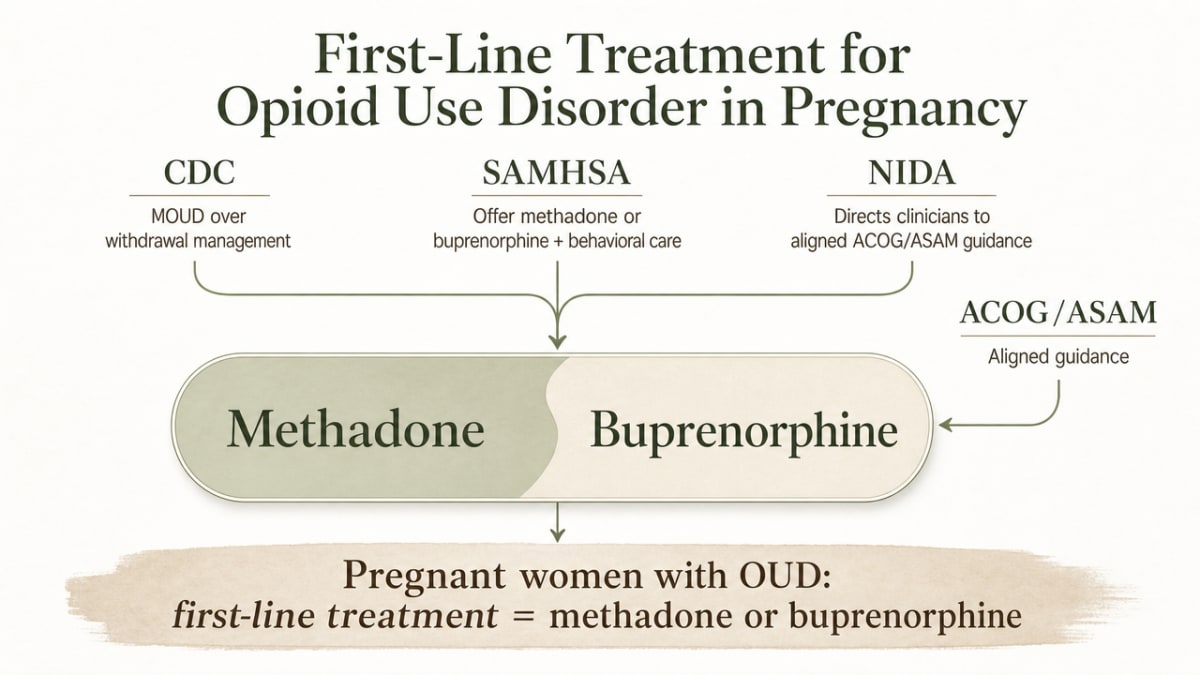
The CDC recommends medication for opioid use disorder (MOUD) over withdrawal management via tapering, specifically naming methadone and buprenorphine as first-line therapies 6. The Substance Abuse and Mental Health Services Administration (SAMHSA) concurs, stating that pregnant women with OUD should be offered medication treatment with methadone or buprenorphine alongside evidence-based behavioral care 7. The National Institute on Drug Abuse (NIDA) also directs clinicians to aligned guidance from the American College of Obstetricians and Gynecologists (ACOG) and the American Society of Addiction Medicine (ASAM), which similarly identify methadone and buprenorphine as first-line for pregnant patients 2.
This consensus among major medical bodies (CDC, SAMHSA, ACOG, ASAM) is rare in medicine, indicating a strong evidence base.
The rationale is clear: untreated opioid use disorder during pregnancy increases risks such as overdose, missed prenatal appointments, and unstable substance use patterns that expose the fetus to cycles of exposure and withdrawal. MOUD provides a steady state, preventing these fluctuations. A CDC research synthesis found that methadone or buprenorphine combined with behavioral therapy reduces misuse, prevents withdrawal, lowers overdose risk, and improves both maternal and infant outcomes 10.
Therefore, when a treatment team recommends continuing or starting methadone or buprenorphine during pregnancy, they are adhering to the established standard of care in obstetric addiction medicine.
Daily Life with MOUD and its Protective Role in Pregnancy
MOUD involves a daily dose, typically liquid or tablet methadone from a licensed clinic, or buprenorphine (film or tablet) often taken at home once stable. This medication does not cause sedation or euphoria; instead, it occupies opioid receptors, stabilizing the body and preventing cravings and withdrawal.
This stability is vital for pregnancy. When the mother is not experiencing withdrawal, the baby is also spared these fluctuations. This allows for consistent prenatal appointments, improved sleep and appetite, and the ability to engage in essential maternal-fetal medicine protocols, such as infectious disease testing, mental health assessments, and coordinated prenatal care 4.
It’s common for MOUD doses to require adjustment as pregnancy progresses due to increased blood volume and metabolic changes. If already on MOUD upon hospital admission, the dose should be continued, not tapered 4. MOUD is always combined with behavioral care, including counseling, trauma work, and dual diagnosis treatment, to address underlying issues while the medication stabilizes the physical dependence 7. This comprehensive approach is supported by evidence.
Alcohol and Benzodiazepines: A Different Urgency
While much of the focus on pregnancy and addiction is on opioids, daily heavy alcohol use or regular use of benzodiazepines (like Xanax, Klonopin, Ativan, or Valium) presents a distinct and more urgent medical situation.
Therefore, it is imperative not to attempt self-tapering of benzodiazepines or quitting alcohol cold turkey if you are a heavy daily user. These decisions require the direct supervision of a medical team aware of your pregnancy and capable of close monitoring.
Safe treatment involves a medically supervised stabilization plan, developed in coordination with your OB, to manage withdrawal symptoms while safeguarding the pregnancy. This level of oversight demands MD, APRN, and RN-level care. SAMHSA’s clinical guidance emphasizes that concurrent non-opioid use must be addressed safely alongside OUD 7, and multidisciplinary teams are recommended for such complex cases 12.
If alcohol or benzodiazepines are part of your daily use, this information should be shared immediately during your initial call, as it will influence the treatment plan and its urgency.
Components of a Safe Kansas Treatment Team
Medical Staffing for Residential and PHP Care in Pregnancy
Not all treatment programs are equipped to safely care for pregnant patients. Pregnancy introduces specific medical needs that require specialized staffing.
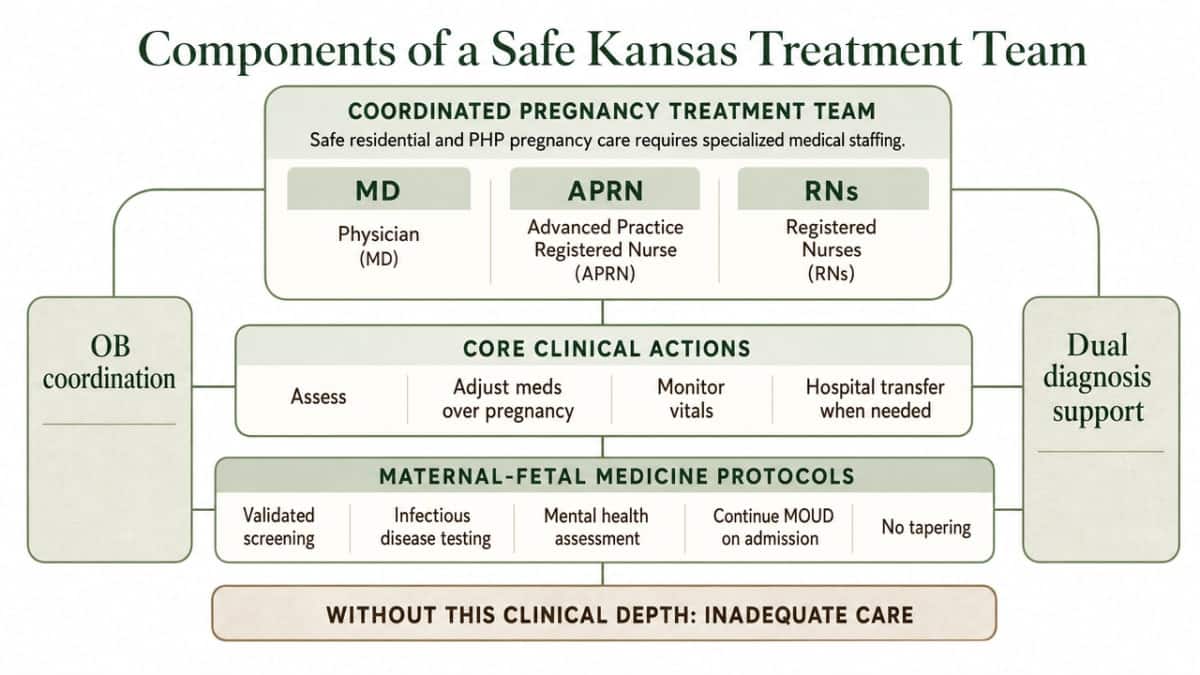
An appropriate program will have on-site medical professionals: a physician (MD), an advanced practice registered nurse (APRN), and registered nurses (RNs). These clinicians must be able to assess patients, adjust medication doses as pregnancy progresses, monitor vital signs, and identify when hospital transfer is necessary. Maternal-fetal medicine protocols for pregnant patients with opioid use include validated screening, infectious disease testing, mental health assessment, and continuation of MOUD upon admission, not tapering 4. A program lacking this clinical depth cannot provide adequate care.
Sunflower Recovery’s model is built upon this MD/APRN/RN structure, which enables safe residential and Partial Hospitalization Program (PHP) care during pregnancy. Patients are monitored by clinicians who can intervene directly, rather than by counselors who must defer to external medical personnel.
When evaluating programs, ask:
- Is a physician overseeing my care?
- Are RNs on site 24/7?
- Have you treated pregnant patients on MOUD before?
Vague answers warrant further inquiry.
Coordination with Your OB/GYN
A common misconception is that you must choose between your OB/GYN and an addiction treatment team. This is incorrect and often delays seeking help.
Sunflower Recovery is an addiction treatment center, not a labor and delivery unit. Your OB or midwife remains your primary prenatal care provider. The key is that Sunflower’s medical team (MD, APRN, RNs) will directly communicate with your prenatal provider, share records, and collaboratively develop a care plan. Both teams will be aware of your MOUD dosage, coordinate appointments, and share any adjustments made to your treatment.
This multidisciplinary approach, involving continued MAT, infectious disease workup, and mental health assessment in parallel, aligns with maternal-fetal medicine protocols 4and AHRQ-linked system recommendations for perinatal behavioral health 12.
During your initial call, one of the first questions will be about your OB and gestational age, initiating this crucial coordination from the outset.
Dual Diagnosis: Addressing Co-Occurring Mental Health Conditions
For many women, substance use is intertwined with underlying mental health conditions such as depression, anxiety, PTSD, or trauma. Effective treatment must address these co-occurring issues.
Dual diagnosis treatment means simultaneously addressing both substance use and mental health conditions. MOUD stabilizes the body, while trauma-informed therapy, appropriate medication management for mental health, and behavioral care target the root causes of substance use 7. SAMHSA’s clinical guide explicitly states that pregnant women should receive both medication and evidence-based behavioral interventions 7. AHRQ-linked recommendations for perinatal behavioral health emphasize staff training to reduce bias and stigma, recognizing that judgment can deter women from continuing treatment 12.
If previous treatment experiences minimized your mental health concerns, this integrated approach offers a different path. Kansas Medicaid’s implementation of Maternal Depression Screening alongside SBIRT 11further indicates the state’s recognition of the interconnectedness of these issues.
Kansas’s Perinatal Safety Net
Kansas has developed significant infrastructure for perinatal substance use that many patients are unaware of. The state offers resources, even if they are not widely advertised.
One key component is screening. Kansas Medicaid has implemented policies for SBIRT (Screening, Brief Intervention, and Referral to Treatment) for substance use, as well as Maternal Depression Screening 11. This means your OB or midwife is expected to inquire about substance use and mood during prenatal visits, with a payment pathway supporting these screenings. ACOG guidance frames this screening as a collaborative conversation during the first prenatal visit, intended to be supportive, not punitive 8.
The Kansas Perinatal Quality Collaborative (Kansas PQC) is another vital resource. This state body develops resources for hospitals regarding Neonatal Abstinence Syndrome (NAS), promotes universal screening, and works to standardize the diagnosis, coding, and treatment of infants with prenatal opioid exposure across birthing hospitals 3. This ensures consistent, evidence-based care for newborns, regardless of the hospital where they are delivered.
A less known but crucial resource is the perinatal behavioral health consultation line, highlighted in Kansas PQC materials 5. Your OB, midwife, or Sunflower’s medical team can use this line to consult with specialists on complex cases, including dosing, dual diagnosis, reporting questions, and care coordination. This provides clinicians with expert backup without revealing your identity.
These efforts align with AHRQ-linked recommendations for perinatal behavioral health, which advocate for multidisciplinary care teams, community partnerships, and staff training to reduce stigma 12. While Kansas’s system is not perfect, a supportive framework exists. When you contact Sunflower’s medical team, you are connecting with a network designed to support women in your situation.
Planning for Delivery and NAS/NOWS
Engaging in treatment during pregnancy allows for proactive planning for delivery, eliminating uncertainty.
This planning typically involves your OB, Sunflower’s medical team, and the birthing hospital agreeing on your MOUD dose for labor, delivery, and postpartum, ensuring it continues without tapering during admission 4. The hospital will be aware that your baby may require monitoring for Neonatal Abstinence Syndrome (NAS), also known as Neonatal Opioid Withdrawal Syndrome (NOWS). NAS/NOWS refers to a set of treatable symptoms (irritability, feeding difficulties, tremors) that some infants exhibit after prenatal opioid exposure. It is an expected outcome and not a reason to avoid MOUD, as untreated substance use leads to worse outcomes than stable medication.
Kansas has specifically addressed this through the Kansas Perinatal Quality Collaborative, which provides NAS resources and encourages birthing hospitals to adopt standardized diagnosis, coding, and treatment pathways 3. Many Kansas hospitals now prioritize non-pharmacologic approaches for infants, such as rooming-in, skin-to-skin contact, quiet environments, and breastfeeding when appropriate, before considering medication for the baby.
Your role now is to inform your treatment team of your planned delivery hospital, allowing them to facilitate necessary communications. The goal is for your care during labor and delivery to be seamless and well-coordinated.
The First Phone Call and Payment Options
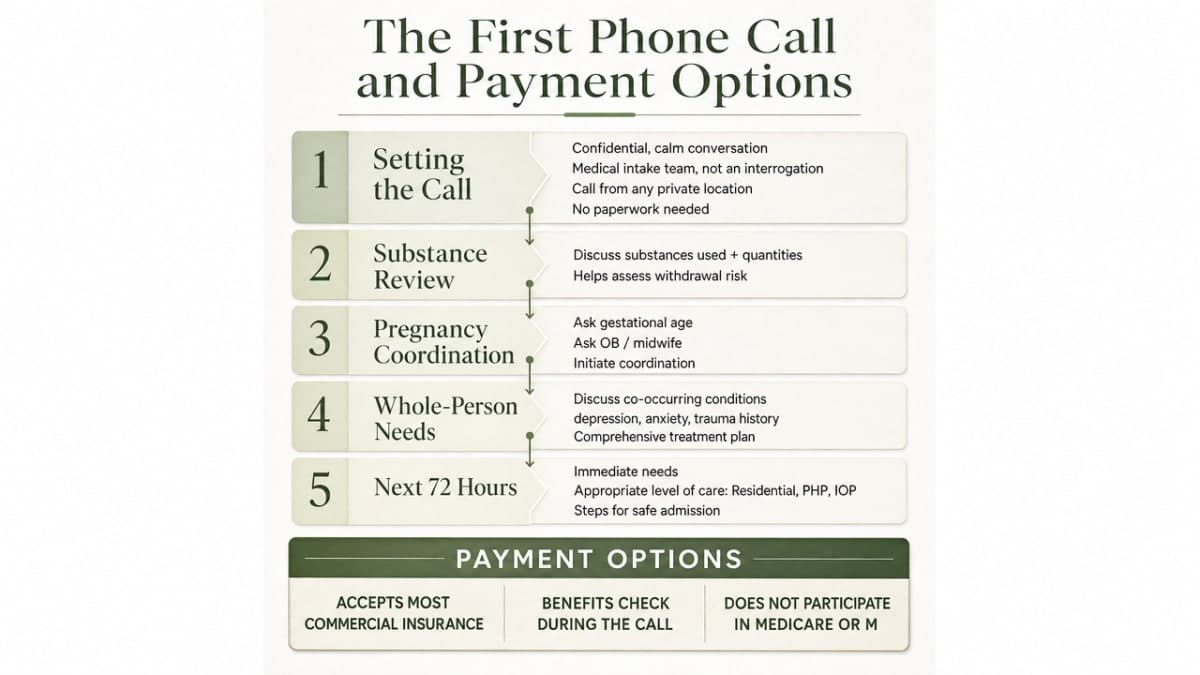
The initial phone call is a confidential and calm conversation with a medical intake team, not an interrogation. You can call from any private location without needing paperwork.
During the call, you’ll discuss:
- The substances you’re using and quantities, which helps the medical team assess withdrawal risk.
- Your gestational age and OB/midwife, to initiate coordination 4.
- Any co-occurring conditions like depression, anxiety, or trauma history, to ensure a comprehensive treatment plan 12.
- The next 72 hours, including immediate needs, appropriate level of care (residential, PHP, or IOP), and steps for safe admission.
Regarding payment, Sunflower accepts most commercial insurance and can conduct a benefits check during the call. Sunflower does not participate in Medicare or Medicaid. If you have these coverages, the team can guide you to other Kansas options, including Medicaid-enrolled programs and the state’s SBIRT pathway through your OB 11, ensuring you have a clear next step.
One confidential call is all that’s needed to start, serving Kansas City and statewide from Osawatomie, Kansas.
Connect with a medical team for safe detox
Speak directly with clinicians about safe, medically supervised addiction care during pregnancy.
Frequently Asked Questions
Is it safer to quit cold turkey or to get medical treatment while I’m pregnant?
Medical treatment is safer for opioid use in pregnancy. Sudden withdrawal can cause fetal distress, and unsupervised detox has high relapse rates, which is why CDC names methadone or buprenorphine as first-line care rather than tapering 6. For alcohol or benzodiazepines, quitting cold turkey can trigger seizures. Either way, please don’t do this alone. A medical team can stabilize you without harming your pregnancy.
Will I lose custody of my baby if I call a treatment center in Kansas?
Kansas has no statute or regulation requiring a report to DCF solely because a pregnant woman is using substances 5. Reporting decisions are tied to infant safety, and Kansas guidance encourages providers to engage families collaboratively rather than punitively 5. Being in active treatment, showing up to prenatal visits, and having a documented care team is exactly the kind of record that supports keeping your family together.
Can I stay on methadone or buprenorphine during my whole pregnancy?
Yes. That’s the recommended approach. SAMHSA, CDC, ACOG, and ASAM all support continuing methadone or buprenorphine throughout pregnancy paired with behavioral care 7, 2. Hospital protocols specifically say that women already on MAT should be continued on their dose when admitted, not tapered 4. Your dose may need adjustment as your body changes in later trimesters. Your OB and Sunflower’s medical team make those calls together.
What if I’m using alcohol or benzodiazepines instead of opioids?
Say that on the first call. Withdrawal from alcohol or benzodiazepines can cause seizures, which is dangerous for you and your baby, so the plan and the timeline shift. You need medically supervised stabilization with MD, APRN, and RN oversight coordinated with your OB — not a peer group or a weekend program. SAMHSA guidance also calls for addressing concurrent non-opioid use through multidisciplinary teams 7, 12.
Does Sunflower Recovery work with my OB, or do I have to choose one?
You keep your OB. Sunflower is an addiction treatment center, not a labor and delivery facility. Its medical team — MD, APRN, RN — talks directly to your prenatal provider, shares records, and builds a plan together. That kind of parallel, multidisciplinary care is exactly what maternal-fetal medicine protocols and AHRQ-linked perinatal recommendations describe as the standard 4, 12. Coordination begins on day one, not after admission.
What happens on the first phone call, and is it really confidential?
Yes, it’s confidential. The medical intake team asks what you’re using and how much, how far along you are, who your OB is, and whether other conditions like depression, anxiety, or trauma are in the picture 12. They talk with you about the next 72 hours and what level of care fits — residential, PHP, or IOP. No forms in front of you. No interrogation. One conversation.
References
- Opioid use disorder in pregnancy. https://pmc.ncbi.nlm.nih.gov/articles/PMC6881108/
- Opioids, Pregnancy and Neonatal Care. https://nida.nih.gov/nidamed-medical-health-professionals/opioid-crisis-pain-management/opioids-pregnancy-neonatal-care
- NAS Resources – Kansas Perinatal Quality Collaborative. https://kansaspqc.kdhe.ks.gov/resources/nas-resources/
- Opioid Use in Pregnancy Protocol (University of Cincinnati, Revised February 2022). https://med.uc.edu/docs/default-source/obstetrics-and-gynecology-docs/ob-mfm-protocols/k-p/opioid-use-in-pregnancy.pdf?sfvrsn=39eea9c7_2
- Mandated Reporting and Perinatal Substance Use (Kansas PQC, February 2023). https://kansaspqc.kdhe.ks.gov/wp-content/uploads/2023/03/February-2023-LF-Slides.pdf
- Treatment of Opioid Use Disorder Before, During, and After Pregnancy. https://www.cdc.gov/opioid-use-during-pregnancy/treatment/index.html
- Clinical Guidance for Treating Pregnant and Parenting Women With Opioid Use Disorder and Their Infants. https://library.samhsa.gov/sites/default/files/sma18-5054.pdf
- Committee Opinion No. 711: Opioid Use and Opioid Use Disorder in Pregnancy. https://pubmed.ncbi.nlm.nih.gov/28742676/
- Maternity Care For Pregnant Women With Opioid Use Disorder. https://pmc.ncbi.nlm.nih.gov/articles/PMC7675450/
- The MATernaL and Infant NetworK to Understand Outcomes Associated with Treatment of Opioid Use Disorder During Pregnancy and Postpartum. https://stacks.cdc.gov/view/cdc/110329/cdc_110329_DS1.pdf
- III.E.3. State Action Plan – Women/Maternal Health – Annual Report. https://mchb.tvisdata.hrsa.gov/Narratives/AnnualReport1/938e9b2f-985b-43c6-8d1b-a82ab7d3b383
- Mental Health and SUD During Pregnancy and Postpartum. https://integrationacademy.ahrq.gov/news-and-events/news/mental-health-and-sud-during-pregnancy-and-postpartum-new-chcs-report