
Key Takeaways
- EMDR is a structured, trauma-focused therapy recommended by federal clinicians for co-occurring PTSD and substance use disorder, but it works alongside detox and medication-assisted treatment, not as a replacement 4.
- Research shows moderate to large effects for EMDR on craving, PTSD, depression, and anxiety, though it does not significantly reduce addiction severity on its own 6.
- Contact a Kansas program directly and ask specific questions about EMDR training, standard versus AF-EMDR, timing within your plan, and how co-occurring conditions are treated together.
When cravings have a memory behind them
If you’ve tried to stop drinking or using before, and the cravings persist, there is often an underlying reason. For many, that reason is trauma the body still remembers even after the mind has tried to move on.
You may have heard about EMDR — Eye Movement Desensitization and Reprocessing. It is a trauma-focused therapy, and it is one of the treatments federal clinicians recommend for people with both post-traumatic stress and a substance use disorder 4. It is not hypnosis, a quick fix, or a replacement for detox or medication-assisted treatment.
When delivered by a trained clinician within a structured program, EMDR can help process memories that trigger cravings, making recovery feel more attainable. This article explains what EMDR is, what the research supports, and what to ask a Kansas program before committing.
What EMDR actually is (and what it isn’t)
EMDR is a structured, trauma-focused psychotherapy that targets specific traumatic memories and how your nervous system stores them. During a session, a trained therapist guides you through short sets of side-to-side eye movements, or similar bilateral stimulation like handheld buzzers or alternating tones. This occurs while you briefly bring a difficult memory to mind.
The goal is not to erase the memory, but to allow your brain to finish processing it. This helps prevent the memory from triggering panic, shame, or urges when something reminds you of it.
EMDR is not hypnosis; you remain awake, aware, and in control, able to stop at any point. It is also not a spiritual practice, a personality test, or a substitute for medical detox. If medically supervised withdrawal or medication-assisted treatment (MAT) is needed for opioids or alcohol, EMDR works alongside these interventions.
Federal clinical guidance lists EMDR among recommended trauma-focused psychotherapies for PTSD 10. The VA’s National Center for PTSD specifically states that individuals with co-occurring PTSD and substance use disorder can safely engage in and benefit from EMDR 4. This is important for those who may have been told they were “too fragile” or “not sober enough” for trauma work.
The eight phases of an EMDR course, in plain language
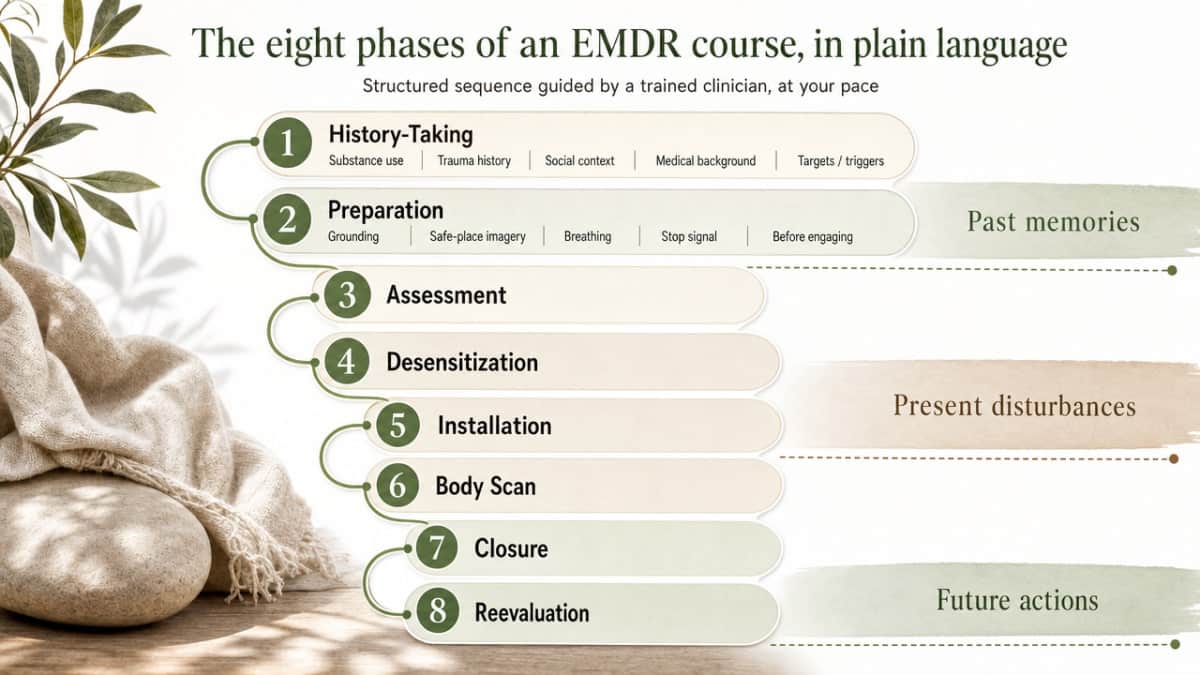
An EMDR course is not a single, prolonged session focused on trauma. It is a structured sequence of eight phases, guided by a trained clinician at your pace. SAMHSA’s federal guidance describes EMDR as addressing three time frames—past memories, present disturbances, and future actions—across these eight phases, emphasizing that formal training is required for its delivery 5.
Here is what each phase involves:
- 1. History-Taking. Your therapist gathers information about your substance use, trauma history, social context, and medical background. This phase involves mapping the terrain and identifying potential target memories or triggers.
- 2. Preparation. This crucial phase involves learning grounding and calming skills, such as safe-place imagery, breathing techniques, and a signal to stop. These tools equip you before engaging with difficult memories. For those early in recovery, this phase can span several sessions.
- 3. Assessment. You and your therapist select a specific target, such as a memory, an image, or a negative belief (e.g., “I am unsafe”). You then rate its current level of disturbance on a simple scale to establish a baseline.
- 4. Desensitization. This is the core processing phase. While holding the target in mind, your therapist guides you through short sets of bilateral stimulation (eye movements, tappers, or tones). You check in between sets, and the disturbance rating typically decreases as the memory’s emotional intensity lessens.
- 5. Installation. Once the negative belief associated with the memory has subsided, you and your therapist reinforce a more positive and accurate belief (e.g., “I survived,” “I have choices now”) using additional sets of bilateral stimulation.
- 6. Body Scan. You identify and process any remaining physical tension or sensations associated with the memory, such as a tight chest or stomach knot.
- 7. Closure. Each session concludes with grounding techniques, ensuring you leave feeling regulated and stable, regardless of whether the target memory is fully resolved.
- 8. Reevaluation. At the beginning of the next session, you and your therapist review what has shifted. Sometimes a target requires more work, or a new one emerges, guiding the ongoing course of therapy.
What the evidence shows EMDR can and can’t do for addiction
Understanding the evidence base for EMDR in substance use disorders is crucial. The research provides specific insights into its effectiveness.
Craving, PTSD, depression, anxiety: where the effects are strongest
Recent research indicates that EMDR can significantly impact specific symptoms. A 2025 meta-analysis of 14 studies on EMDR in individuals with substance use disorders examined its effects on five outcomes. The effect sizes (Hedges’ g) were: craving g = 0.55, PTSD symptoms g = 0.69, depression g = 0.64, and anxiety g = 0.72, all indicating moderate to large effects. However, the effect on addiction severity itself was g = 0.14, which was not statistically significant 6.
This means EMDR can meaningfully reduce the intensity of urges, the intrusion of trauma symptoms, and the burden of depression and anxiety. For individuals struggling with co-occurring PTSD, depression, or panic alongside cravings, addressing these four areas simultaneously is a key reason trauma-focused programs utilize EMDR.
An earlier 2024 meta-analysis specifically focused on craving across five studies involving 266 participants. It found a standardized mean difference of −0.866, suggesting EMDR substantially reduced craving compared to control conditions. The authors noted that small sample sizes and varied protocols warranted cautious interpretation 1.
For individuals in Kansas considering treatment, if substance use is intertwined with unresolved trauma, depression, or anxiety—as it often is—EMDR targets these underlying layers, and the evidence supports this approach.
The honest ceiling: addiction severity itself
The 2025 meta-analysis found that EMDR did not significantly reduce overall addiction severity 6. This indicates that EMDR is not a standalone treatment for substance use disorder. Instead, it functions as a trauma therapy that, within the right context, diminishes factors that drive substance use—such as cravings, flashbacks, depression, and anxiety.
Other components of a comprehensive care plan must address the addiction itself. These may include medical detox, medication-assisted treatment for opioid or alcohol use disorder, relapse-prevention strategies, peer support, and structured accountability. If a program claims EMDR alone will resolve addiction, this is not supported by research. However, if EMDR is presented as an important part of a plan that also includes evidence-based SUD care, this aligns with clinical findings. This distinction is crucial to prevent disappointment.
Standard EMDR vs. Addiction-Focused EMDR (AF-EMDR)
There are two primary versions of EMDR:
Standard EMDR targets past traumatic memories, such as assault, accidents, or childhood experiences. The theory is that processing these memories fully can reduce the nervous system’s activation of panic and shame, which often drive substance use. This is the version commonly used in trauma-focused programs and recommended by the VA for co-occurring PTSD and SUD 4.
Addiction-Focused EMDR (AF-EMDR) maintains the eight-phase structure but focuses on addiction-specific targets. These include memories of the first high, sensory triggers that provoke cravings, beliefs about inability to cope without substances, and the physical sensations of urges. Instead of processing pre-addiction trauma, AF-EMDR processes memories directly related to the addiction itself.
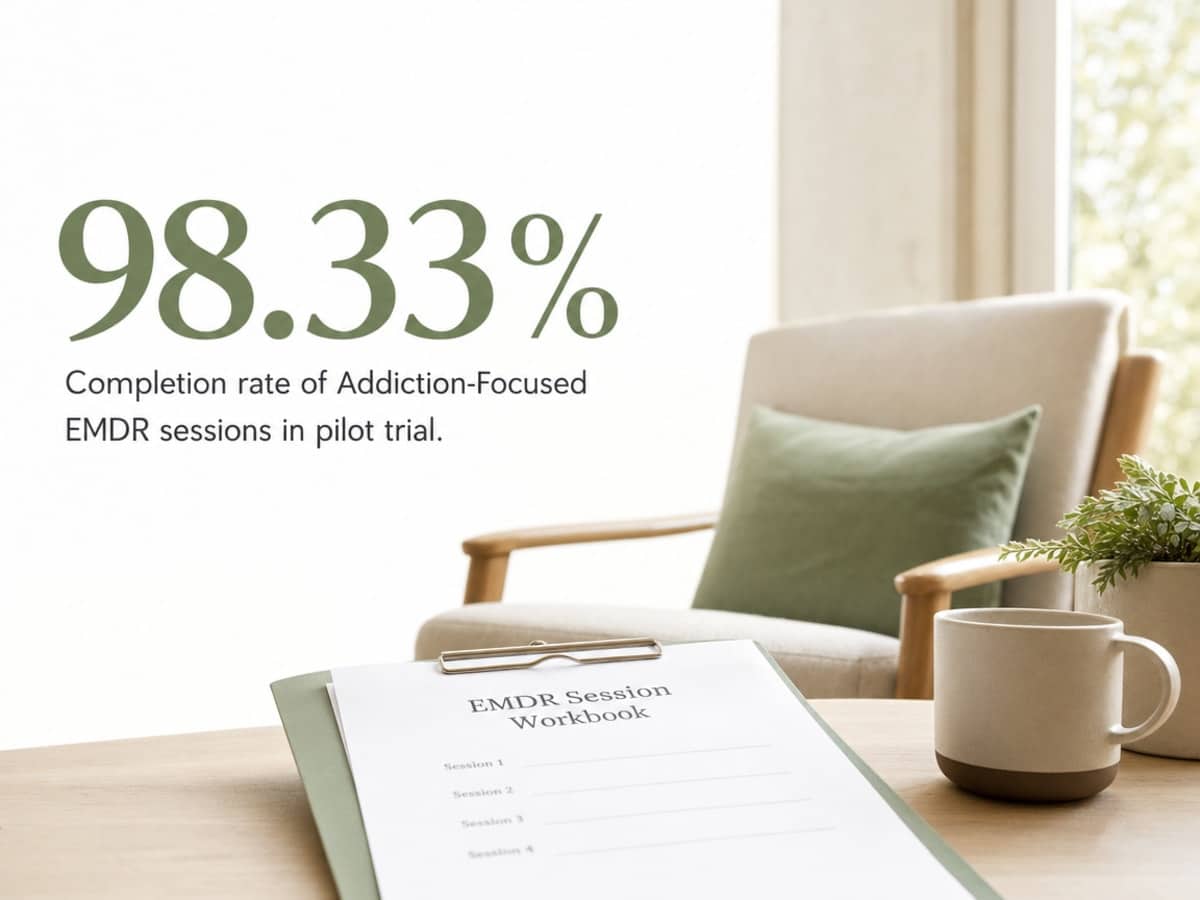
A randomized pilot trial compared AF-EMDR combined with cognitive behavioral therapy (CBT) against CBT alone in adults with SUD in residential and partial hospitalization programs. Both groups showed improvement in cravings, perseverative thoughts, and irrational addiction-related cognitions, with no statistically significant difference between groups. Notably, 98.33% of participants completed all four AF-EMDR sessions 2. This high completion rate in a challenging treatment population suggests the protocol is well-tolerated in higher levels of care.
When considering EMDR in a Kansas residential or PHP program, it is advisable to ask which version a clinician uses, if they are trained in both, and how they determine the most appropriate approach for your case. Many trauma-informed programs integrate standard EMDR as a foundation, incorporating AF-EMDR techniques when cravings are a primary concern.
How EMDR fits inside a dual-diagnosis program
For EMDR to be effective, it must be integrated into a program that addresses both substance use and co-occurring mental health conditions. This “dual diagnosis” approach ensures that addiction and conditions like PTSD, depression, anxiety, or eating disorders are treated concurrently by the same team within a unified plan.
Typically, this begins with an assessment. If medical detox is necessary, it precedes EMDR, as EMDR is not initiated during acute withdrawal. Once stable, an individualized plan is developed, with EMDR as one component alongside medication management (if needed), cognitive behavioral therapy, group sessions, family involvement, and relapse-prevention planning. The VA/DoD guideline for substance use disorder emphasizes this integrated care model for individuals with multiple diagnoses, cross-referencing trauma-focused therapy from the PTSD perspective 7.
The preparation phase of EMDR is particularly important in this setting. Therapists dedicate time to building grounding skills before addressing traumatic memories, ensuring that processing does not overwhelm coping capacities and lead to relapse. This integrated approach within residential or partial hospitalization care offers an advantage over weekly outpatient sessions in early recovery, as the structured environment provides support if a session triggers distress.
A German randomized trial is currently investigating this integration model, enrolling 158 patients with SUD and co-occurring PTSD. It compares EMDR added to treatment-as-usual against treatment-as-usual alone 8. This study design highlights that EMDR is viewed as an adjunct to comprehensive addiction care, not a replacement. This is the model to seek when evaluating Kansas programs.
EMDR and the Kansas treatment landscape
Kansas faces significant challenges with substance use. Between 2020 and 2023, drug overdose deaths, largely driven by synthetic opioids, increased across the state’s public health regions, affecting both urban and rural areas 9. Many individuals across Kansas are grappling with untreated or undertreated substance use disorders.
Access to EMDR in Kansas is variable. Not all addiction programs offer it, and it requires formal training beyond a weekend workshop for clinicians to provide it effectively. SAMHSA’s federal guidance explicitly states that EMDR necessitates formal training and should be integrated into a trauma-informed program, rather than being an isolated offering 5. Therefore, it is essential to determine if clinicians are genuinely trained in EMDR and if the program structure supports its delivery within a comprehensive treatment plan.
While areas like the corridor from Osawatomie to Kansas City offer residential and outpatient care, geographical access is only one factor. The key is finding a program that treats substance use and trauma as interconnected clinical issues, rather than separate problems.
Questions to ask a Kansas program before you commit
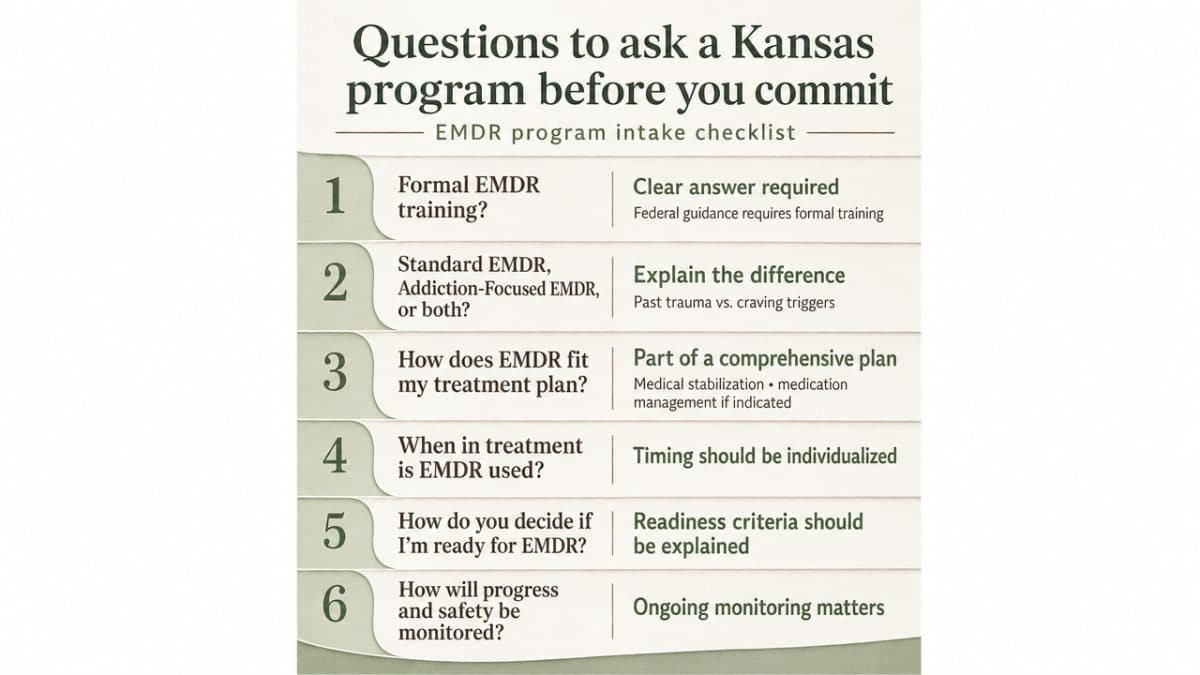
When contacting a treatment program, you deserve clear answers about their EMDR services. The following questions can help you assess if a program is equipped to deliver EMDR effectively:
“Are the clinicians on staff formally trained in EMDR?” Federal guidance mandates formal training for EMDR delivery 5. Vague responses or statements like “we do trauma work” are not sufficient.
“Do you use standard EMDR, Addiction-Focused EMDR, or both?” A program that can articulate the differences and explain how they would choose between processing past trauma versus targeting craving triggers demonstrates a clinical understanding beyond mere marketing.
“How does EMDR fit into my individualized treatment plan?” You should hear that EMDR is part of a comprehensive plan that includes medical stabilization, medication management (if indicated), group and individual therapy, and relapse-prevention work. If EMDR is presented as the sole treatment for addiction, this contradicts research findings 6.
“What happens if a session brings something up between appointments?” In residential or partial hospitalization care, there should be concrete protocols for support, such as on-site clinical staff or nurses. This structured support is why EMDR is often more manageable in higher levels of care.
“Do you treat co-occurring PTSD, depression, or anxiety in the same plan?” This question confirms whether the program genuinely offers dual-diagnosis treatment, integrating mental health care with SUD treatment, rather than simply adding a trauma session to standard care.
Having these questions prepared will provide you with valuable information, regardless of the program’s answers.
What EMDR is not: clearing up common misreads
It’s important to clarify common misconceptions about EMDR before engaging with a clinician:
- It is not hypnosis. You remain awake, in control, and can pause a session at any time. There is no trance state, suggestion, or loss of awareness involved.
- It is not memory erasure. Traumatic events do not vanish. What changes is the intensity with which they trigger panic, shame, or urges when reminded of them.
- It is not a replacement for medical detox or medication-assisted treatment. If supervised withdrawal or medication for opioid or alcohol use disorder is necessary, EMDR complements these treatments rather than substituting them.
- It is not a standalone addiction treatment. The 2025 meta-analysis of 14 EMDR-in-SUD studies found no statistically significant effect on addiction severity itself 6. EMDR addresses the underlying trauma and emotional factors; dedicated addiction care is still required.
- It is not something a general counselor can offer after a weekend workshop. Federal guidance clearly states that formal training is required for clinicians to deliver EMDR 5. If a program cannot confirm this training, further inquiry is warranted.
A grounded next step
If your substance use is linked to unresolved trauma, EMDR, delivered by a trained clinician within a dual-diagnosis program, is an evidence-supported approach to address this connection. It is not a cure or a shortcut, but a vital component of a comprehensive plan that also directly treats your addiction.
The next concrete step is to make a phone call. When you are ready, contact Sunflower Recovery Center and ask if EMDR would be part of an individualized treatment plan for your situation. Bring the questions from this article with you; you are entitled to specific answers.
Start Your EMDR-Informed Recovery Journey Today
Connect now to explore if EMDR therapy can be part of your personalized addiction treatment plan.
Frequently Asked Questions
Can EMDR therapy treat addiction on its own?
No. A 2025 meta-analysis of 14 studies found EMDR’s effect on addiction severity was not statistically significant, though it effectively reduced craving, PTSD, depression, and anxiety 6. EMDR addresses the trauma and emotional factors driving substance use; dedicated addiction care, including detox, medication-assisted treatment, relapse-prevention, and structured support, is also necessary.
How is EMDR different from regular talk therapy for addiction?
Talk therapy typically involves verbalizing experiences and thoughts. EMDR, however, involves holding a specific memory or trigger in mind while the therapist guides you through bilateral stimulation (e.g., side-to-side eye movements, handheld tappers, or alternating tones). The focus is on processing how your nervous system stored the memory, rather than solely on verbal narration.
Is EMDR safe if I’m still early in recovery or have active cravings?
Yes, when properly administered. The VA’s National Center for PTSD confirms that individuals with co-occurring PTSD and substance use disorder can safely benefit from EMDR 4. Safety is ensured through the preparation phase, where grounding skills are established before addressing traumatic memories. EMDR is not initiated during acute withdrawal, and structured care settings like residential or partial hospitalization programs offer enhanced support.
What’s the difference between standard EMDR and Addiction-Focused EMDR (AF-EMDR)?
Standard EMDR targets past traumatic memories that influence current nervous system responses. AF-EMDR uses the same eight-phase structure but focuses on addiction-specific targets, such as memories of initial substance use, sensory triggers for cravings, or beliefs about coping without substances 2. Many trauma-informed programs integrate standard EMDR as a foundation, incorporating AF-EMDR techniques when cravings are a primary concern.
How long does a course of EMDR take?
The duration varies. An AF-EMDR pilot trial utilized a four-session protocol in residential and partial hospitalization settings 2. Standard trauma-focused EMDR often requires more sessions, as the preparation phase alone can take several sessions in early recovery, and each traumatic target typically needs its own processing. The therapist works at your pace; rushing the desensitization phase early in treatment is generally not recommended.
How do I find out if a Kansas program actually offers EMDR?
Directly ask specific questions: Are the clinicians formally trained in EMDR, as SAMHSA guidance requires 5? Do they use standard EMDR, AF-EMDR, or both? How is EMDR integrated into your individualized treatment plan alongside SUD care? When would it typically begin? If responses are vague or limited to “we do trauma work,” continue seeking specific answers. You are entitled to detailed information.
References
- The Effect of Eye Movement Desensitization and Reprocessing Therapy on Reducing Craving in Populations with Substance Use Disorder: A Meta-Analysis. https://pmc.ncbi.nlm.nih.gov/articles/PMC11592247/
- Feasibility and Efficacy of Addiction-Focused Eye Movement Desensitization Reprocessing in Adults with Substance Use Disorder. https://pubmed.ncbi.nlm.nih.gov/37871138/
- Eye Movement Desensitization and Reprocessing (EMDR) as a Treatment of Substance Use Disorders. https://clinicaltrials.gov/study/NCT03114423
- Treatment of Co-Occurring PTSD and Substance Use Disorders in VA. https://www.ptsd.va.gov/professional/treat/cooccurring/tx_sud_va.asp
- TIP 57: Trauma-Informed Care in Behavioral Health Services (Full Manual PDF). https://library.samhsa.gov/sites/default/files/sma14-4816.pdf
- Therapeutic effects of eye movement desensitization and reprocessing for substance use disorders: a meta-analysis of addiction-related and emotional symptoms. https://pubmed.ncbi.nlm.nih.gov/41040945/
- Management of Substance Use Disorder (SUD) (2021). https://www.healthquality.va.gov/guidelines/mh/sud/
- Effectiveness of EMDR in patients with substance use disorder and comorbid PTSD. https://pmc.ncbi.nlm.nih.gov/articles/PMC5356401/
- Drug Overdose Deaths in Kansas 2020-2023 Quick Facts (SUDORS Data by PHEP Regions). https://www.kdhe.ks.gov/DocumentCenter/View/43963/SUDORS-Data-By-PHEP-Regions
- PTSD: A VA Clinician’s Guide to Optimal Treatment of Posttraumatic Stress Disorder. https://www.pbm.va.gov/PBM/AcademicDetailingService/Documents/PTSD_QRG.pdf