
Key Takeaways
- A program promising you’ll sleep through withdrawal under anesthesia is offering the exact procedure the American Society of Addiction Medicine recommends against due to death risk.10Ask instead for awake, monitored care with symptom-easing medication.
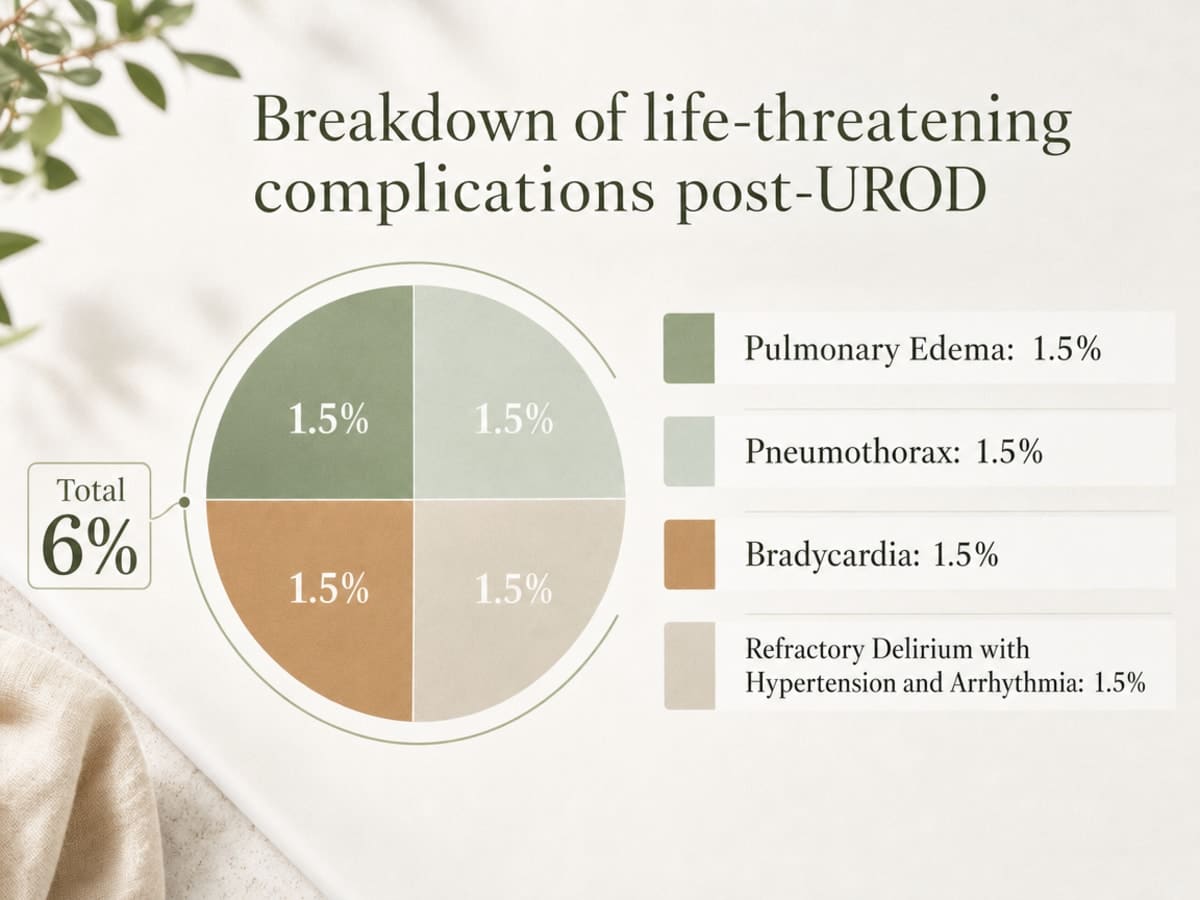
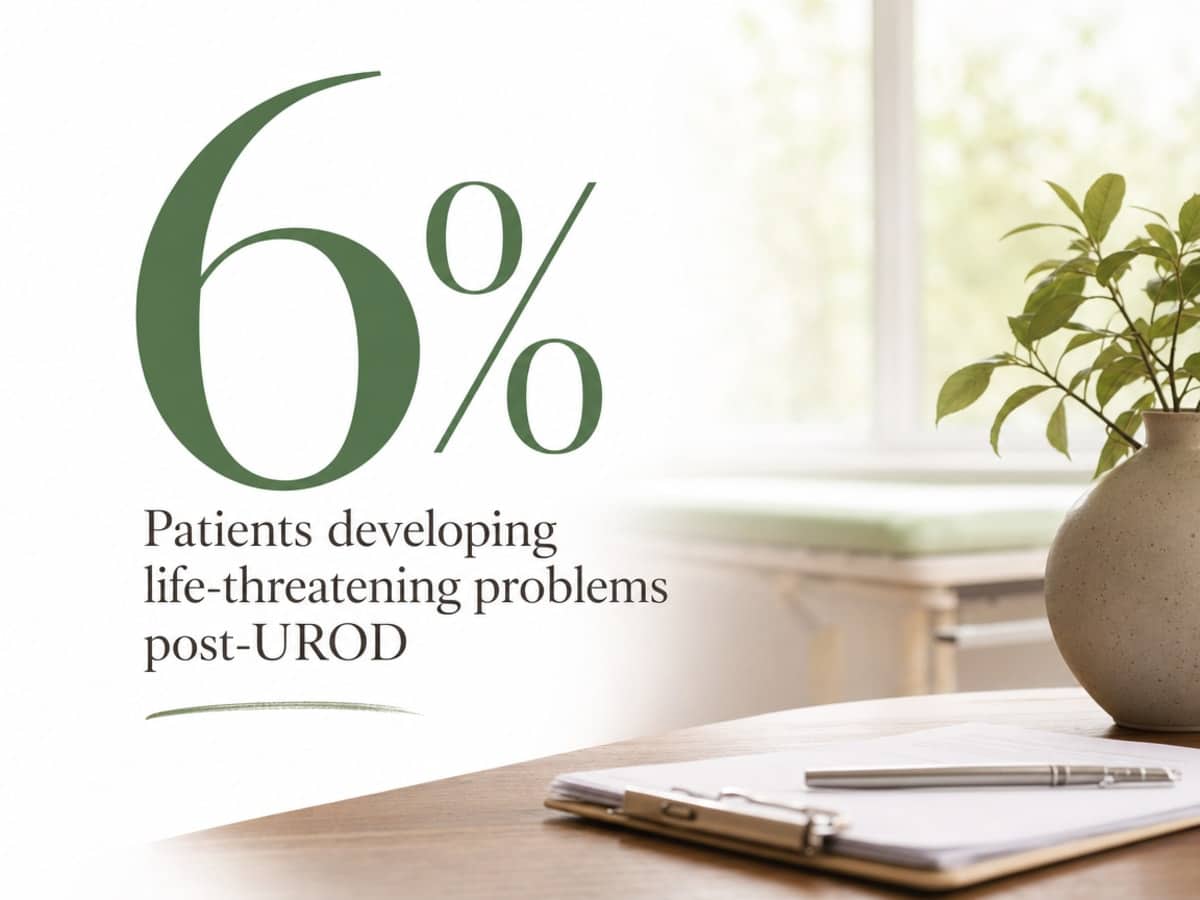
- If staff can’t name specific complications like pulmonary edema, pneumothorax, bradycardia, or refractory delirium, they aren’t giving informed consent. In one study, 6% of rapid detox patients had life-threatening events.3Demand specifics before agreeing to anything.
- A detox with no defined next step is a cliff, not treatment. Detox alone does little to change long-term drug use.6Insist the program names day three, day thirty, and day ninety before you sign.
- Language like ‘cured in a weekend’ or ‘end your addiction’ signals a program selling a finish line that doesn’t exist. Recovery is measured in months and years, and detox is one stage of a longer process, not the whole answer.
- If intake never asks about trauma, mental health, or continuing medication, the program is treating chemistry and ignoring the person. Look for methadone, buprenorphine, or naltrexone paired with therapy for co-occurring conditions.7
Why the promise of sleeping through withdrawal feels like the only way out
If you’re reading this at 2 a.m. with your skin crawling and your legs restless, or if you’re a parent watching someone you love shake on the bathroom floor, the idea of skipping the worst days of withdrawal in a single sleep sounds like mercy. Not weakness. Mercy.
Rapid detox centers know this. Their websites are built around that exact feeling. They show you a bed, a soft blanket, a countdown from years of dependence to a few hours under anesthesia. Wake up clean. Skip the sweats, the vomiting, the bone-deep ache. It reads like a rescue.
You are not foolish for clicking those pages. You are exhausted. When your body is in revolt and your mind is running out of ideas, a fast exit is the most human thing to want.
This article is not going to shame you for considering it. It’s going to show you five specific things to listen for on a phone call or read on a website, so you can tell the difference between a real path through withdrawal and a marketing promise that could cost you everything. You deserve both the truth and a way forward.
Rapid detox is not the same as medically supervised withdrawal
These two phrases sound almost identical. They are not. Confusing them is the single biggest reason people end up on the wrong website at the wrong hour of the night.
Rapid detox — sometimes marketed as ultra-rapid opioid detoxification, or UROD — puts you under general anesthesia or deep sedation for a few hours while a drug like naloxone or naltrexone is used to strip opioids off your brain’s receptors all at once. The idea is that you sleep through the storm your body would otherwise have to weather awake. The American Society of Addiction Medicine looked at the evidence and stated plainly that opioid withdrawal management using anesthesia is not recommended because of the high risk for adverse events or death.10
Medically supervised withdrawal is a different animal. You stay awake. You are monitored by nurses and physicians. Symptoms are managed as they arrive — nausea medication for the nausea, clonidine or lofexidine for the sweats and blood pressure spikes, buprenorphine or methadone to ease the withdrawal itself rather than force it. The World Health Organization’s withdrawal management guidance describes this as careful monitoring, symptomatic treatment, and a direct handoff into ongoing care.8It is slower on purpose. It is designed to keep you alive and connected to what comes next.
One compresses days of physiological chaos into a few hours of anesthesia. The other treats withdrawal as a medical event to be managed, not a problem to be knocked out cold.
If a program uses the word “detox” without telling you which of these two it is, that is your first question. Ask it before you ask about price, location, or how soon you can be admitted. The answer determines almost everything else about your safety.
The five red flags to listen for on the phone or read on the website
Red flag one: they promise you’ll sleep through withdrawal under anesthesia
This is the pitch that pulls you in. A few hours asleep, and the worst is behind you. If a program leads with that promise — whether the words are “sleep through detox,” “anesthesia-assisted,” “ultra-rapid,” or “one-day detox” — pay close attention. That is the exact procedure the American Society of Addiction Medicine reviewed and specifically recommended against, citing high risk for adverse events or death.10
Here is what actually happens under the hood. When you’re put under general anesthesia and given a drug like naloxone or naltrexone, your brain’s opioid receptors get stripped bare in minutes instead of days. Your body responds the way it would to the most violent withdrawal imaginable — heart rate spikes, blood pressure swings, lungs can fill with fluid, the gut empties in every direction. You don’t feel it because you’re unconscious. Your organs still go through it.
Sleeping through withdrawal is a marketing image, not a medical mechanism. The withdrawal still happens. It just happens while you can’t respond to it.
So when you’re on the phone, listen for how they describe the procedure itself. If the answer includes anesthesia, deep sedation, or being “put under,” that is red flag one. A real answer sounds different. It sounds like being awake, being monitored, being given medication to soften the worst symptoms while your body finds its way through them at a pace it can survive.
Red flag two: they downplay complications or won’t name them
Ask them, directly: “What are the serious complications that have happened to patients during or after this procedure?”
Listen to what comes back. If the answer is a soft “minor side effects,” “some nausea,” or “we’ve never had a problem” — that is not informed consent. That is a sales script.
A program that respects you will name specific things. They will use real words.
- Pulmonary edema, which is fluid filling your lungs.
- Pneumothorax, which is air trapped between your lung and your chest wall, collapsing part of the lung.
- Bradycardia, a heart rate slow enough to be dangerous.
- Refractory delirium, a state of severe confusion that doesn’t respond to normal treatment, sometimes paired with dangerously high blood pressure and irregular heartbeat.
These are not hypothetical. A six-month follow-up study of patients who went through ultra-rapid opioid detoxification found that 6% developed life-threatening problems — and the breakdown was exactly those four events. One case of pulmonary edema, one pneumothorax, one bradycardia episode, one refractory delirium with hypertension and arrhythmia, each roughly 1.5% of the group studied.3That was a monitored setting, with intensive care available. Not a strip-mall clinic.
There are also case reports of even rarer catastrophes. A 2022 report described a subarachnoid hemorrhage — bleeding around the brain — in a patient during anesthesia-assisted rapid detox.2It’s rare. It’s also the kind of thing that changes a family forever.
Six percent is not a rounding error. If a program tells you “complications don’t happen here,” they are either not tracking, not disclosing, or both. Any of those three is disqualifying.
You are allowed to ask the question a second time if the first answer was vague. You are allowed to write down what they say. If they get impatient with your questions, that itself tells you something about how they would treat you once you were on the table.
Red flag three: no plan for what happens after you wake up
Ask them what day three looks like. Day thirty. Day ninety.
If the answer is vague — “we’ll give you a list of resources,” “we can refer you if you want,” “most of our clients do fine on their own” — that is red flag three. A detox with no landing pad is a cliff, not a treatment.
Here is why this matters more than any brochure will admit. When you wake up from a rapid detox, the physical dependence is gone but the craving is not. Your brain has spent years wiring itself around opioids. That wiring doesn’t rewrite in a single afternoon. The first weeks after detox are when relapse risk is highest, and — this is the part rapid detox marketing almost never mentions — relapse after any detox is when overdose risk is highest, because your tolerance has dropped.
A responsible program tells you about the next step before you sign anything. They can name it:
- Residential care for a defined length of time.
- A partial hospitalization program.
- Intensive outpatient with a set schedule.
- Medication for opioid use disorder — buprenorphine, methadone, or extended-release naltrexone — with a prescriber lined up.
- Therapy that starts before you leave the building.
If they can’t tell you specifically what happens on Monday, ask why. Detox by itself, done in isolation, has been shown to do very little to change long-term drug use.6You deserve a program that knows that and plans around it, not one that hands you a discharge slip and calls it recovery.
Red flag four: they treat detox like it’s the cure
Watch the language on the website. Words like “cured in a weekend,” “free from opioids in 24 hours,” “one-time procedure,” or “end your addiction” tell you the program is selling a finish line that doesn’t exist.
Opioid use disorder is not an infection. There is no course of treatment that ends it in an afternoon. The National Institute on Drug Addiction states plainly that detoxification alone does little to change long-term drug use.6That’s not pessimism. It’s what forty years of research shows. Detox removes the drug from your system. It does not remove the reasons your brain reached for it, the pain it was trying to quiet, or the neural pathways that got carved during years of use.
A program that frames detox as the whole answer is either misinformed or hoping you are. Either way, that framing is red flag four.
What should you hear instead? A program should describe detox as one stage — usually the first stage — of a longer process. They should talk about what treatment looks like after your body stabilizes. They should tell you honestly that recovery is measured in months and years, not hours, and that people who stay connected to care do better than people who don’t.
This is not the answer you want when you’re desperate for something fast. It is the answer that keeps you alive long enough to feel better. There is a difference between a program that respects that timeline and one that sells against it.
Red flag five: no mention of trauma, mental health, or ongoing medication
Look at their intake questions. Read the “what we treat” page. If everything is about opioids and nothing is about why you started, that is red flag five.
Most people who develop opioid dependence didn’t wake up one day wanting to. Something came first. A back injury and a prescription that outlasted the pain. A parent you lost. A trauma you never told anyone about. Depression that came before the pills or arrived alongside them. An eating disorder, anxiety, a relationship that broke something inside you. Those things do not go away when the opioids leave your system. If anything, they get louder.
A program that never asks about them is treating chemistry and ignoring the person.
Evidence-based care for opioid dependence includes medications for opioid use disorder — methadone, buprenorphine, or naltrexone — combined with counseling and behavioral therapies. The National Institute on Drug Addiction reports that this combination reduces opioid use and opioid-related overdose deaths.7Detox without either of those pieces is missing most of what works.
So when you’re on the call, listen for these questions on their side. Do they ask about your mental health history? About trauma? About what you’ve tried before? Do they mention medication that would continue after detox, not just during it? Do they have clinicians who treat co-occurring conditions?
If the intake feels like a checkout line — name, insurance, when can you come in — that is a program built to move you through, not to help you stay. You deserve a place that wants to know why, not just what.
What happened at one New York clinic — and why it still matters
In 2012, public health investigators in New York City reviewed the records of a single outpatient clinic offering anesthesia-assisted rapid opioid detoxification. Of the 75 patients treated there, two died and five others were hospitalized for serious adverse events, including cardiac arrest and pulmonary complications.11The CDC published the findings in its Morbidity and Mortality Weekly Report and concluded that the procedure carries substantial risk, including death, with little to no evidence supporting its use.11
One clinic. Seventy-five people. Two who did not go home. Five more whose families spent the next days in an ICU waiting room instead of a recovery bedroom.
That scope matters. This was not a national dataset. It was one facility, and the numbers should not be stretched to represent every rapid detox program in the country. But it should not be shrunk, either. The CDC took the unusual step of issuing a public alert and asking providers to avoid the procedure entirely in favor of evidence-based treatments.11Regulators do not write those alerts about safe procedures.
Here is why this still matters, more than a decade later. Programs offering the same service are still operating. The marketing is glossier now. The waiting rooms look nicer. The underlying procedure — flooding the brain’s opioid receptors with an antagonist while you’re unconscious — has not changed. If you’re reading a website tonight that promises to end your dependence in a single afternoon, you’re looking at the same offer those 75 people accepted.
The overdose risk that follows discharge
This is the part rapid detox brochures rarely explain, and it may be the most important thing on this page.
When you’ve been using opioids regularly, your body builds tolerance. It takes more of the drug to feel the same effect, and — this is the dangerous part — it takes more of the drug to stop your breathing. After any detox, rapid or otherwise, that tolerance falls off a cliff within days. The dose that felt manageable last month can kill you next week. The CDC notes plainly that people are at increased risk of overdose when tolerance is lost and opioids are resumed at previous doses after a period of abstinence.5
Rapid detox makes this window sharper. You go from full dependence to a bare-receptor state in a single afternoon, then walk out the door. If cravings hit at day four and the number in your phone is the same one you called last month, the body that answers is not the body that used last month. Same dose, different outcome.
This is why the discharge plan matters as much as the detox itself. Medication for opioid use disorder, a therapist you’ve already met, someone answering the phone at 9 p.m. — those are not extras. They are the reason you get to see the other side.
What safer withdrawal management actually looks like
Safer does not mean painless. It means survivable, monitored, and connected to what comes next. If you’ve only ever seen rapid detox marketing, you may not know what a standard withdrawal program actually looks like from the inside. Here’s the shape of it.
You arrive awake and stay awake. A clinician takes a full history — what you’ve been using, how much, for how long, what else is in your body, what mental health conditions you carry, what medications you’re already on. That intake is not paperwork. It’s how they keep the next 72 hours from turning into an emergency.
Medication is used to soften withdrawal, not force it. Buprenorphine or methadone can ease the worst of the physical symptoms while your nervous system recalibrates. Clonidine or lofexidine bring down blood pressure and quiet the sweats. Anti-nausea medication for the nausea. Something for sleep. The World Health Organization’s withdrawal guidance describes this as careful monitoring paired with symptomatic treatment and a direct handoff into continued care.8
You are checked on frequently. Vitals, hydration, mental state. If something shifts, someone notices before it becomes a crisis.
And — this is the part that separates a real program from a revolving door — the discharge plan is built before you’re discharged. Medication for opioid use disorder continued past detox. A therapist. A place to go on day four. The National Institute on Drug Abuse is direct that methadone and buprenorphine reduce opioid use and opioid-related overdose deaths, which is why they belong in the plan, not just in the detox room.7
It takes longer than an afternoon. That’s the point. Your body needs the days it needs, and the people around you need time to build something that holds after you leave.
A path forward that treats the reason you started using, not just the chemistry
Somewhere before the pills or the powder, there was a first reason. A surgery that didn’t heal right. A grief no one helped you carry. A childhood you’ve spent years trying not to think about. An anxiety that only quieted when you found something that quieted it.
Rapid detox does not touch any of that. It cannot. It’s a procedure aimed at your receptors, not your life.
A path forward looks different. It starts with time — enough time for your body to stabilize without being rushed, and enough time for a clinician to actually get to know you. It uses medication for opioid use disorder when that’s what you need, because methadone and buprenorphine reduce opioid use and opioid-related overdose deaths.7It pairs that medication with therapy that asks about the trauma underneath, the depression that came before or arrived alongside, the anxiety, the relationships, the parts of you that hurt when the drug isn’t there to numb them.
Structured residential care exists for this exact reason. Weeks, not hours. A team that builds a plan around who you actually are, not a protocol that treats you like a chemistry problem to solve by Friday.
You are allowed to want the fast way out. You are also allowed to choose the way that lets you stay. Programs like Sunflower Recovery Center are built around that longer arc — the one that treats the reason, not just the receptor.
Ready to break free from unsafe detox?
Connect with a team that understands safe, trauma-informed detox and long-term recovery support.
Frequently Asked Questions
Is rapid detox under anesthesia safe?
No leading medical body considers it safe. The American Society of Addiction Medicine recommends against ultra-rapid opioid detoxification under anesthesia because of the high risk for adverse events or death.10Documented complications include cardiac arrhythmias, fluid in the lungs, aspiration, and, in rare cases, bleeding around the brain.2Safer alternatives exist and are the standard of care.
What is the difference between rapid detox and medically supervised withdrawal?
Rapid detox puts you under anesthesia or deep sedation while drugs strip opioids from your receptors in a few hours. Medically supervised withdrawal keeps you awake and monitored, using medications like buprenorphine, methadone, or clonidine to ease symptoms as they arrive. The World Health Organization describes this second approach as careful monitoring, symptomatic treatment, and a direct handoff into ongoing care.8
Will I actually sleep through withdrawal if I choose a rapid detox center?
You will be unconscious, but your body still goes through withdrawal. Heart rate, blood pressure, and breathing can swing violently while you can’t respond. In one monitored study, 6% of patients developed life-threatening problems, including fluid in the lungs, a collapsed lung, dangerously slow heart rate, and severe delirium.3Sleep is the marketing image. What happens to your organs underneath it is different.
Why is overdose risk higher after any detox, including rapid detox?
When you stop using opioids, your tolerance drops within days. The dose that felt manageable last month can stop your breathing next week. The CDC warns that people are at increased risk of overdose when tolerance is lost and opioids are resumed at previous doses after abstinence.5Rapid detox makes that window sharper because it moves you from full dependence to zero in an afternoon.
What should I ask a detox program before I agree to anything?
Ask five things. Will I be under anesthesia or awake? What specific complications have your patients had? What medication will I be on during and after detox? What does day three, day thirty, and day ninety look like? Do you treat trauma, depression, and anxiety alongside the substance use? Vague answers on any of these are your signal to keep calling other programs.
If rapid detox isn’t the answer, what actually works for opioid dependence?
The evidence points to medications for opioid use disorder — methadone, buprenorphine, or naltrexone — combined with counseling and behavioral therapy over time. The National Institute on Drug Abuse reports that methadone and buprenorphine reduce opioid use and opioid-related overdose deaths.7Structured residential or outpatient care that also treats trauma and co-occurring mental health conditions gives you a longer, sturdier path than any single procedure.
References
- Ultrarapid Opioid Detoxification: Current Status in Iran and the World. https://pmc.ncbi.nlm.nih.gov/articles/PMC4070154/
- Managing Subarachnoid Hemorrhage Precipitated by Anesthesia-Assisted Rapid Opioid Detoxification: A Case Report and Review. https://pmc.ncbi.nlm.nih.gov/articles/PMC8885228/
- Six-Month Follow-Up Study of Ultrarapid Opiate Detoxification With Naloxone and Naltrexone Maintenance Treatment. https://pmc.ncbi.nlm.nih.gov/articles/PMC4331657/
- Safety, efficacy, and long-term results of a modified version of rapid opiate detoxification under general anaesthesia: a prospective study in methadone, heroin, codeine and morphine addicts. https://pubmed.ncbi.nlm.nih.gov/10714849/
- CDC Guideline for Prescribing Opioids for Chronic Pain – Clinical Reminders. https://www.cdc.gov/drugoverdose/pdf/prescribingguidelines_factsheet-a.pdf
- Principles of Drug Addiction Treatment: A Research-Based Guide (Third Edition). https://nida.nih.gov/publications/principles-drug-addiction-treatment-research-based-guide-third-edition
- What are the treatments for heroin use disorder? (NIDA Research Report). https://nida.nih.gov/publications/research-reports/heroin/what-are-treatments-heroin-use-disorder
- Clinical Guidelines for Withdrawal Management and Treatment of Drug Dependence in Closed Settings (WHO). https://www.ncbi.nlm.nih.gov/books/NBK310652/
- Long-term relapse of ultra-rapid opioid detoxification. https://pubmed.ncbi.nlm.nih.gov/24471478/
- American Society of Addiction Medicine (ASAM) National Practice Guideline for the Use of Medications in the Treatment of Addiction Involving Opioid Use. https://pmc.ncbi.nlm.nih.gov/articles/PMC4605275/
- Deaths and Severe Adverse Events Associated with Anesthesia-Assisted Rapid Opioid Detoxification — New York City, 2012. https://www.cdc.gov/mmwr/preview/mmwrhtml/mm6238a1.htm
- Rapid opioid detoxification during general anesthesia. https://pubmed.ncbi.nlm.nih.gov/10598605/