
Key Takeaways
- Willpower rarely resolves addiction because roughly half of people with a substance use disorder also have a co-occurring mental health condition that the substance has been managing.1
- The middle weeks of residential care do the deepest work: integrated treatment for depression, anxiety, PTSD, or trauma alongside the substance use, delivered by clinicians who coordinate.2, 7
- Stays under 30 days often end before real therapy begins; NIDA points to at least three months as the threshold where outcomes meaningfully improve.8
- Judge any program by three things: enough time (60–90 days), integrated care for what’s underneath, and a specific discharge plan with named outpatient handoffs.
What Willpower Alone Was Never Going to Fix
You’ve probably tried to stop. Maybe more than once. You’ve white-knuckled a weekend, promised yourself Monday, made it a few days or a few weeks, and then something cracked open and you were back where you started. If you’re reading this at 2 a.m. with a glass or a bag or a bottle within reach, you already know the loop.
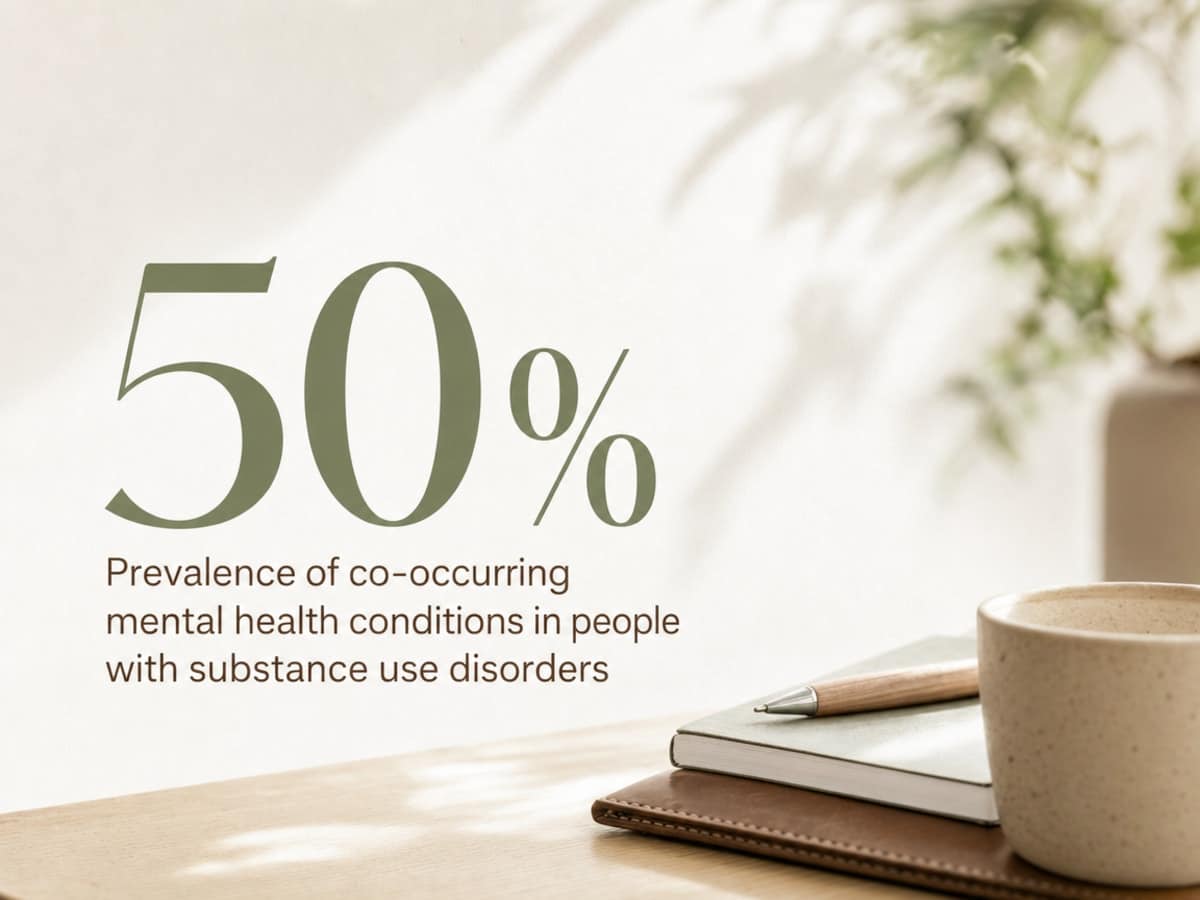
Here’s what the research would predict: willpower alone doesn’t fix this, because for most people the substance isn’t the whole story. Nearly half of people with a substance use disorder are also living with a co-occurring mental health condition — depression, anxiety, PTSD, an eating disorder, something older that the drinking or using has been quietly managing for years.1 When the substance is doing a job — muting a memory, slowing a panic, making a body feel livable — quitting without treating the underlying reason is like turning off a smoke alarm while the kitchen is still on fire.
That’s not a character flaw. It’s a physiology problem and a psychology problem stacked on top of each other, and it needs a level of care that a few therapy sessions between shifts at work can’t reach.
Residential treatment isn’t a punishment or a last resort. It’s a specific kind of environment — 24/7 support, clinicians who can actually see the whole picture, and enough time for your brain and body to stop being in survival mode long enough to do the work underneath. The rest of this article walks through what changes inside a residential stay, why duration matters more than most people realize, and how to tell a program that will actually help from one that won’t.
What Actually Happens Inside a Residential Stay
The First Week: Letting Your Nervous System Land
The first few days are quieter than you think. You’ll meet with a doctor, probably a nurse, someone who does intake paperwork, and someone whose job is to sit with you if you can’t sleep. If you’re detoxing, that’s handled with medical supervision, not willpower. If you’re already past the acute physical piece, the first week is about something harder to name: your body figuring out it’s safe.
You have been running on adrenaline for a long time. Hiding it takes energy. Getting the substance takes energy. Managing people’s reactions takes energy. When all of that stops at once, most people don’t feel relief right away. You might feel worse before you feel better. You might cry at breakfast. You might sleep fourteen hours and still feel tired. That’s your nervous system landing.
Structure does a lot of the work in this stretch. Meals happen at set times. A therapist you’ll see three times a week gets introduced. A bed in a room that isn’t yours starts to feel like a bed. You’re not being asked to make decisions about dinner or bills or your phone. Someone else is holding the perimeter so you can stop.
The clinical team is also watching. They’re doing full assessments — medical, psychiatric, substance use history, trauma history — because the treatment plan they build in week two depends on what they learn in week one. SAMHSA’s guidance is that anyone entering SUD treatment should be screened for co-occurring mental health conditions, and anyone entering mental health treatment should be screened for substance use, right at the front door.3 That screening is what makes the rest of your stay actually fit you.
The Middle Weeks: Treating What’s Underneath the Using
By the second and third week, something shifts. You’re sleeping. You can taste food again. The fog thins enough that you can hold a conversation without rehearsing every sentence. This is when the real work starts — and it usually isn’t about the substance at all.
Roughly half of people with a substance use disorder are also living with a co-occurring mental health condition — depression, anxiety, PTSD, bipolar disorder, an eating disorder, or something else.1 That’s not a small subgroup. That’s every other person in the room. If you’ve been drinking to sleep because your mind won’t stop at night, or using because a memory keeps finding you, or both — you’re not an outlier. You’re the average case.
Integrated care is what the research recommends for this: treating the mental health condition and the substance use at the same time, in the same building, by clinicians who talk to each other.2, 7 SAMHSA calls this the preferred model, and it’s supported by evidence that people who get integrated treatment show reduced substance use, better psychiatric functioning, and less hospitalization than people who get one condition treated in isolation while the other is ignored.4
In practice, the middle weeks tend to look like this: individual therapy sessions two or three times a week, group therapy most days, a psychiatric consult if medication is part of the plan, and specific work on whatever the assessment surfaced. If depression is driving the drinking, you’re treating the depression. If anxiety spikes at night and that’s when you use, you’re building tools for the anxiety and the sleep. If an eating disorder has been running alongside the substance use, both get addressed.
Group therapy surprises a lot of people. You may walk in convinced no one else could possibly understand your version of this, and then someone across the circle describes their Tuesday night and it sounds exactly like yours. That recognition — that you’re not uniquely broken, that this is a recognizable pattern with recognizable treatment — is part of what changes inside a residential stay that outpatient sessions between shifts can’t replicate.
The middle weeks are also when treatment plans get adjusted. If something isn’t working, the team sees it, because they see you every day. Medication doses get changed. Approaches get swapped. This is what SAMHSA’s evidence-based toolkit describes as stage-wise care with regular progress checks — not a fixed program you graduate from on a schedule, but a plan that keeps updating as you do.7
Trauma Work: The Piece Most Short Stays Skip
Here’s what a lot of programs don’t do well, and why it matters: they treat the addiction and leave the trauma alone.
If something happened to you — childhood, a relationship, combat, an accident, a loss, a series of smaller things that added up — and you never got to metabolize it, the substance has probably been doing that job. Numbing what won’t stop replaying. Turning down a body that stays on high alert. This is why unaddressed PTSD symptoms are linked to worse retention and worse substance use outcomes in residential care: if you take away the substance without touching the thing underneath, the thing underneath gets louder, and most people leave.16
Trauma-informed residential care is designed around this. A recent study of a trauma-informed model in a residential SUD program found significant reductions in substance involvement alongside improvements in depression, anxiety, and PTSD symptoms — with high staff adherence to the model, meaning the approach was actually delivered as designed, not just written on a brochure.10
What that looks like day to day is less dramatic than you might expect. It’s a therapist who doesn’t push you to tell the whole story in the first session. It’s grounding techniques for when a memory surfaces in group. It’s clinicians who understand that a startle response, an emotional shutdown, or a sudden urge to leave isn’t defiance — it’s a nervous system doing what it learned to do. It’s specific therapies — trauma-focused approaches, EMDR in some programs, somatic work in others — introduced when you’re stable enough to use them.
You don’t have to be ready to talk about the worst thing that ever happened to you on day three. Good programs know that pace matters. The point of a longer residential stay isn’t to force trauma work — it’s to give you the safety and the time to do it when you’re ready, instead of white-knuckling through a short program and going home with the original wound still open.
The Last Weeks: Practicing the Life You’re Going Back To
The final stretch changes tone. By now, you’ve had a few weeks of stability. You know your triggers in a way you didn’t when you walked in. You’ve named things you may never have said out loud before. The question shifts from what’s broken to what comes next.
This is where you start practicing. Passes home in some programs. Phone calls with family that get coached beforehand and processed afterward. Conversations about the specific moments that used to end with you drinking — the drive home from work, Sunday nights, the group text that always sets you off — and what you’ll do instead. Skills get rehearsed while you still have the building around you.
Family programming often happens in this window too. The people who love you have their own version of what the last few years have been like, and they need a room to say it in. Repair isn’t finished in a weekend, but it can start. You’ll also begin working with your team on the discharge plan — the specific outpatient therapist, the psychiatrist for medication follow-up, the support group meetings, the sober living arrangement if that fits, the daily and weekly structure that will hold you when the walls of the residential program don’t.
You’re not being released. You’re being handed off — with a plan, with contacts, and with a version of yourself that has practiced saying no in a hundred small ways before you have to do it alone.
Why 30 Days Usually Isn’t Enough
The 28-day rehab stay is a historical accident, not a clinical recommendation. It came from insurance benefit designs in the 1980s, not from a study that showed four weeks is when addiction gets fixed. The research points somewhere else entirely.
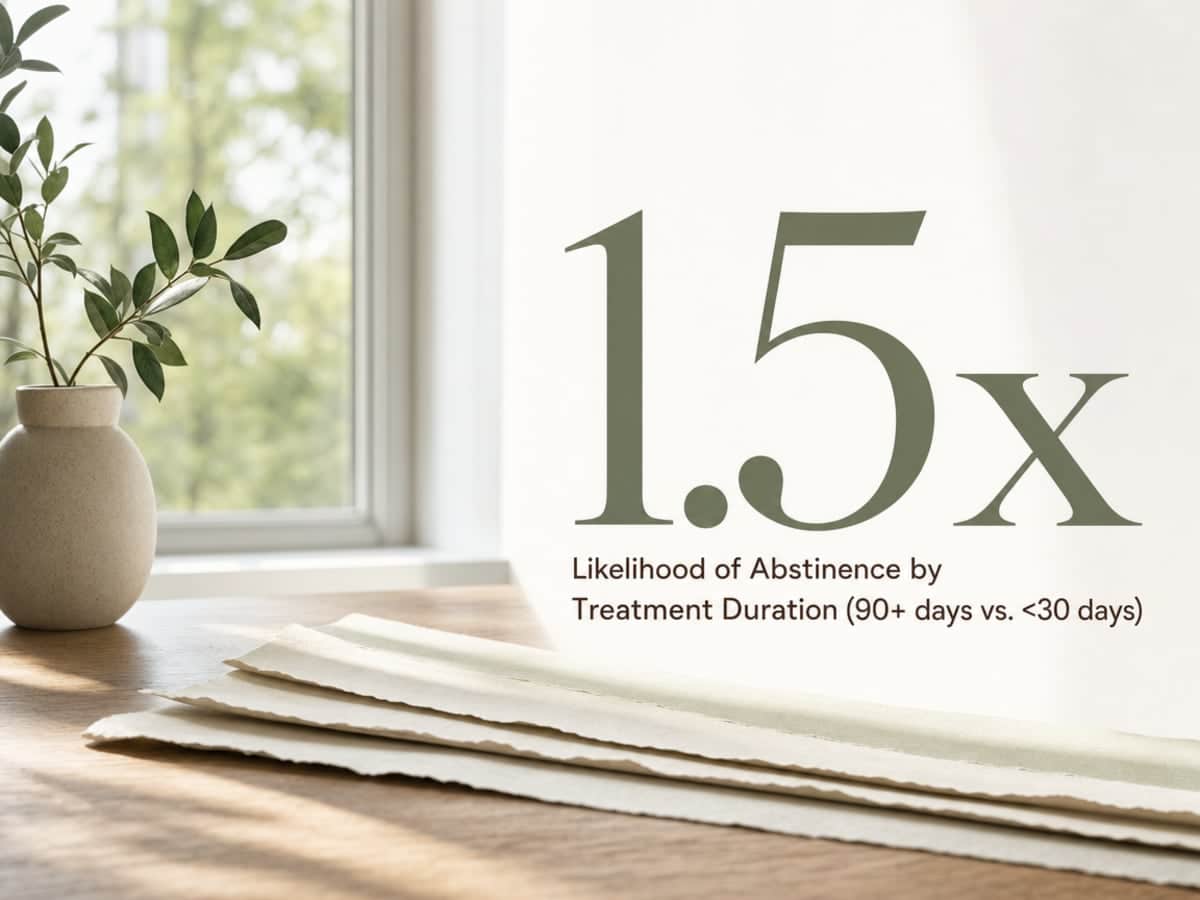
In the National Treatment Improvement Evaluation Study — a large federal evaluation of people across multiple treatment modalities — patients who stayed in residential care 90 days or more were about 1.5 times more likely to be abstinent at one-year follow-up than patients who stayed fewer than 30 days.19 That’s an observational finding based on self-report, so it isn’t a controlled trial, and it captures a mix of program types rather than any one model. But it points in the same direction NIDA does: most people with addiction need at least three months in treatment to meaningfully reduce or stop their use, and outcomes generally improve with longer stays.8
Here’s why the math makes sense once you’ve been through the first few weeks. The first week or two, your body is still recalibrating. Sleep is broken. Appetite is unpredictable. The fog is thick. If a 28-day program sends you home right around the point your brain is finally clear enough to actually do therapy, you’ve done detox and stabilization — not treatment. The trauma work, the skill-building, the practicing of a different life, the family repair conversations — all of that happens in weeks four through eight, sometimes weeks eight through twelve, if you’re given the room.
Does Residential Care Actually Work? What the Evidence Says
Fair question. If you’re going to leave your life for two months, you deserve to know whether the research actually backs this up or whether you’re being sold a story.
The short answer: yes, with caveats worth understanding. A 2019 systematic review of 23 studies found moderate-quality evidence that residential treatment improves outcomes across substance use and life-domain measures — things like employment, housing stability, mental health, and reduced criminal involvement.9 Moderate-quality is an honest word. It means the effect is real and consistent across studies, but the research base has limits: attrition, non-randomized designs, and variation in program quality. The authors are cautious, and you should be too. Residential care isn’t a guaranteed cure. It’s a level of care with a real track record when the pieces are in place.
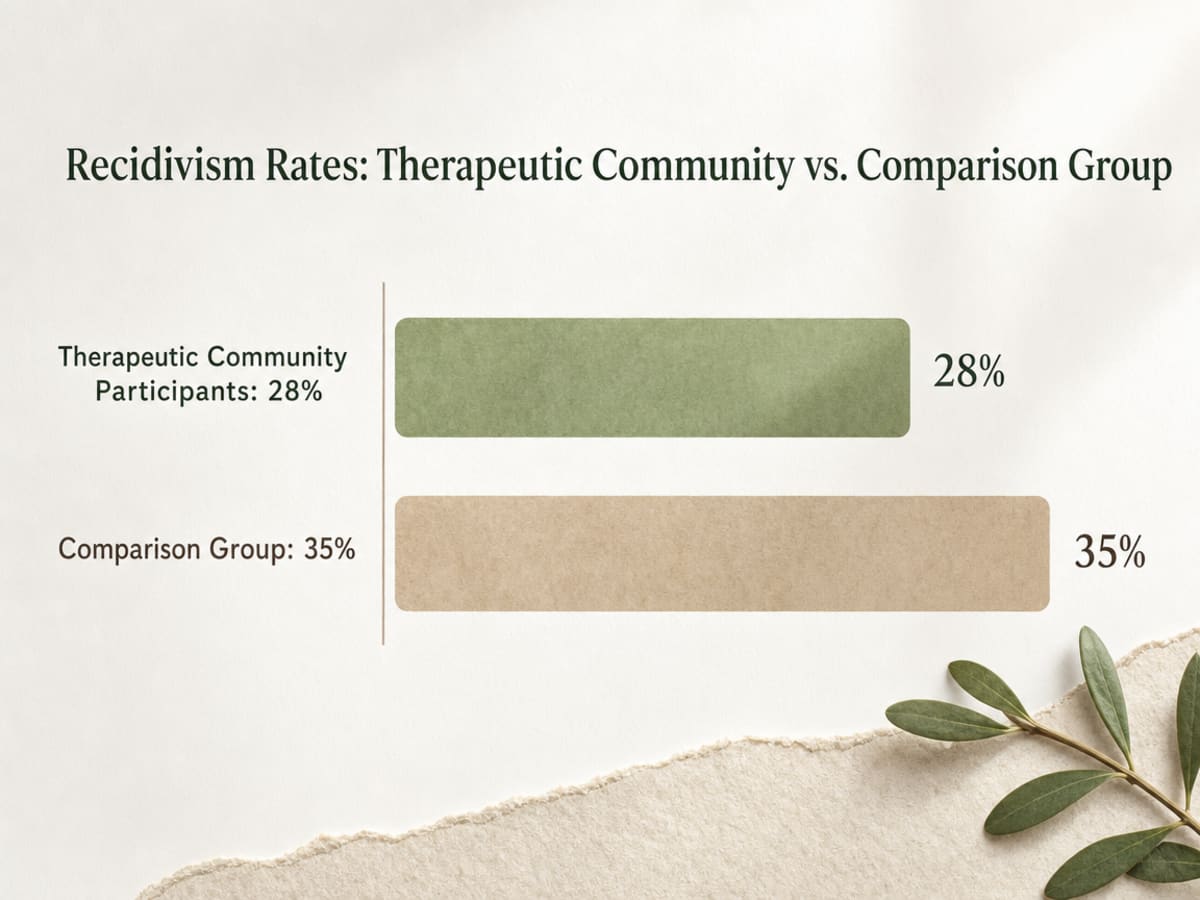
One of the more specific data points comes from a U.S. Department of Justice meta-analysis of therapeutic communities in correctional settings — a structured, residential model that emphasizes community participation and aftercare. Among participants, recidivism dropped to roughly 28 percent, compared with 35 percent in comparison groups.11 Important scope: this evidence comes from a justice-involved population inside correctional facilities. It’s not a general residential outcome number, and it shouldn’t be read as one. What it does show is that when a residential model is delivered with fidelity — real community, real duration, real aftercare — measurable behavior changes follow, even in one of the hardest populations to treat.
Put together, the evidence points in a consistent direction: residential care helps when it’s done well. What “done well” means is what the rest of this article is about — enough time, integrated treatment for the mental health piece underneath, and a real handoff to what comes next.
The Bridge Out: Why Discharge Planning Decides What Sticks
Here’s the part most people don’t hear about until they’re two weeks from leaving: the discharge plan matters as much as the stay itself. A residential program that sends you home with a folder of pamphlets and a wave goodbye is setting you up to fail. That’s not opinion — it’s what the relapse research keeps showing. The predictors of sustained recovery aren’t mysterious. They’re aftercare participation, social support, and continued treatment for any co-occurring mental health condition.18 When those pieces are in place, the odds shift. When they aren’t, the residential stay becomes an expensive pause instead of a turning point.
NIDA is direct about this: following residential treatment, engagement in outpatient or continuing care is critical to reducing relapse risk.8 The building you were in gave you structure. The next 90 days need to give you something similar — thinner, more portable, but still real.
A discharge plan worth trusting names specifics before you walk out. An outpatient therapist with an appointment on the calendar, not a phone number to call. A psychiatrist for medication management if you’re on anything. A step-down level of care — partial hospitalization or intensive outpatient — if going straight home is too big a jump. Support group meetings you’ve already picked. A sober living arrangement if home isn’t stable yet. Family members who’ve been through their own sessions and know what to say and what not to.
Ask any program you’re considering how they handle week nine and week twelve, not just week one. The programs that answer with names, appointments, and a warm handoff are the ones building a bridge. The rest are building a cliff.
The Real Objections: Work, Kids, Money, and Being Away
The reason most people don’t go isn’t that they don’t need to. It’s that the shape of their life won’t seem to let them.
Work. You’re afraid of losing your job, your income, or the reputation you’ve spent years building. FMLA covers many people for medical leave, including for substance use treatment, and most employers are legally prohibited from firing you for seeking care. Short-term disability may apply. HR conversations are more common than you think, and they don’t have to include the word addiction — “medical leave for a health condition” is often enough. The math worth doing isn’t the cost of sixty days off. It’s the cost of another year of active addiction against your job, which is usually much higher than a leave of absence.
Kids. This one hurts the most. You’ll miss things. There’s no version of this where you don’t. But the version of you they’ve been living with — the one who’s exhausted, absent even when present, unpredictable — that version is already costing them something. Family programming during residential care exists partly for this reason: the people who love you get their own support, and repair conversations start while you’re still in treatment.7 Kids can visit in many programs. A short absence with an ending is easier for a child to hold than an ongoing crisis with no end date.
Money. Most commercial insurance covers residential treatment for substance use disorders at some level, and admissions staff at any real program will run your benefits before you commit to anything. Ask directly what your out-of-pocket will be. The honest calculus isn’t residential care versus free — it’s residential care versus the ongoing cost of active addiction, which includes medical bills, legal costs, lost wages, and the slower financial bleed of a life that isn’t working.
Being away. This is the fear underneath the other three. That the world will move on without you. That you’ll come back and not recognize your own life. What actually happens is smaller and stranger — you come back and it’s mostly still there, and you’re the thing that’s different. Sixty days is not a long time in the arc of a life. It’s a long enough time to change what the next twenty years look like.
How to Tell if a Program Has the Three Ingredients That Matter
If you take one thing from this article, take this: the programs that actually help share three features. When you’re calling around, or when a family member is calling for you, listen for these.
Enough time. Ask what a typical length of stay looks like and why. A program that defaults to 28 days because that’s what insurance authorizes without a fight is not building around the research. NIDA is direct that most people need at least three months to meaningfully reduce use, and outcomes generally improve with longer stays.8 Sixty to ninety days should be on the table, with the option to extend if clinically indicated.
Integrated care for what’s underneath. Ask directly: how do you screen for depression, anxiety, PTSD, and trauma at intake, and who treats those conditions during the stay? A real answer names a psychiatrist on staff or on contract, therapists trained in trauma-focused approaches, and a single treatment plan that addresses both the substance use and the mental health condition at the same time.2 If the answer is vague, or if mental health is described as a referral out, keep calling.
A real bridge to what comes next. Ask what week nine looks like. A program worth trusting will describe specific outpatient handoffs, medication follow-up, step-down levels of care, and family involvement — not a folder at discharge.
Three questions. Clear answers, or keep looking. If you’re in Kansas and want to talk to someone who works this way, Sunflower Recovery Center is one place to start.
Talk with an admissions specialist who gets it
Start your path to a safe, structured environment designed for real recovery and lasting change.
Frequently Asked Questions
How long should a residential treatment stay actually be?
Long enough for the work to actually happen — usually 60 to 90 days for most people. NIDA’s guidance is that at least three months in treatment is what it takes to meaningfully reduce or stop use, and outcomes generally improve the longer you stay.8Shorter stays often end right when your brain is finally clear enough to do therapy.
Will insurance cover residential treatment for substance abuse?
Most commercial insurance plans cover residential SUD treatment at some level, though your out-of-pocket costs depend on your specific plan, deductible, and the program’s contracts. Admissions staff at any real facility will verify your benefits before you commit and walk you through what’s covered. Ask directly about length of stay authorization, step-down levels of care, and what happens if the clinical team recommends extending your stay.
What if I’ve already tried rehab and relapsed?
Relapse doesn’t mean treatment failed you — it usually means something didn’t get treated. Common gaps: the stay was too short, the trauma or mental health condition underneath got ignored, or the discharge plan was thin. Aftercare participation, social support, and continuing treatment for co-occurring conditions are the biggest predictors of what actually sticks.18A different program that addresses what got missed can produce a different outcome.
Can I keep my job, kids, or pets while I’m in residential care?
Usually yes, with planning. FMLA protects many jobs during medical leave, and short-term disability may apply. Kids can visit in most programs, and family programming supports the people at home. Pets are the hardest piece — most programs don’t allow them, so you’ll need a family member, friend, or boarding arrangement. None of these is a reason to skip treatment; they’re logistics the admissions team helps sort.
What’s the difference between residential treatment and detox?
Detox handles the acute physical piece — safely getting the substance out of your system with medical supervision. It usually takes a few days to a week. Residential treatment is what comes after: therapy, trauma work, dual-diagnosis care, skill-building, and discharge planning over weeks or months. Detox without residential care is like stitching a wound and never treating the infection. The two work together, not in place of each other.
How do I know if a program treats trauma and mental health, not just addiction?
Ask three questions. Do you screen every admission for depression, anxiety, PTSD, and trauma at intake?3Is there a psychiatrist on staff or on contract who manages medication during the stay? Are your therapists trained in trauma-focused approaches, and is that work part of the standard treatment plan — not a referral out? Vague answers or “we focus on the addiction first” mean the trauma piece will get skipped.
References
- Substance Use Disorder Treatment for People with Co-Occurring Disorders. https://library.samhsa.gov/sites/default/files/pep20-06-04-006.pdf
- Substance Abuse Treatment for Persons With Co-Occurring Disorders (TIP 42). https://library.samhsa.gov/product/substance-abuse-treatment-persons-co-occurring-disorders/sma10-4531
- Screening and Treatment of Co-Occurring Mental Disorders in Substance Use Disorder Treatment Settings. https://library.samhsa.gov/sites/default/files/SAMHSA_Digital_Download/PEP20-02-01_004.pdf
- Managing Life with Co-Occurring Disorders. https://www.samhsa.gov/mental-health/serious-mental-illness/co-occurring-disorders
- Co-Occurring Disorders and Other Health Conditions. https://www.samhsa.gov/substance-use/treatment/co-occurring-disorders
- Mental Health and Substance Use Co-Occurring Disorders. https://www.samhsa.gov/mental-health/what-is-mental-health/conditions/co-occurring-disorders
- Integrated Treatment for Co-Occurring Disorders: Building Your Program. https://library.samhsa.gov/sites/default/files/ebp-kit-building-your-program-10112019.pdf
- Principles of Drug Addiction Treatment: A Research-Based Guide (Third Edition). https://nida.nih.gov/sites/default/files/podat-3rdEd-508.pdf
- The effectiveness of residential treatment services for individuals with substance use disorders: A systematic review. https://pubmed.ncbi.nlm.nih.gov/31254749/
- Feasibility and outcomes of a trauma-informed model of care in residential substance use disorder treatment. https://pubmed.ncbi.nlm.nih.gov/39566845/
- Incarceration-based Therapeutic Communities for Adults. https://crimesolutions.ojp.gov/ratedpractices/incarceration-based-therapeutic-communities-adults
- Evidence-Based Practices Resource Center. https://www.samhsa.gov/libraries/evidence-based-practices-resource-center
- Residential treatment outcomes for individuals with co-occurring substance use and mental health disorders. https://pubmed.ncbi.nlm.nih.gov/15902992/
- Drug abuse treatment outcomes of therapeutic communities. https://pubmed.ncbi.nlm.nih.gov/14594799/
- Duration of residential substance abuse treatment and post-treatment outcomes. https://pubmed.ncbi.nlm.nih.gov/12495835/
- Trauma exposure and substance use treatment outcomes in residential care. https://pubmed.ncbi.nlm.nih.gov/20163380/
- Integrated treatment for co-occurring disorders in residential settings: A review. https://pubmed.ncbi.nlm.nih.gov/27435712/
- Relapse rates following residential substance use treatment and predictors of sustained recovery. https://www.ncbi.nlm.nih.gov/pmc/articles/PMC2851025/
- National Treatment Improvement Evaluation Study (NTIES): Final Report. https://www.ojp.gov/pdffiles1/nij/grants/182362.pdf