
Key Takeaways
- Leavenworth County recorded 114 overdose deaths from 2020-2024 at a rate ranked 7th among 105 Kansas counties, signaling a sustained local crisis affecting families across Lansing, Basehor, and Tonganoxie 1.
- Local providers like The Guidance Center and Heartland Recovery Center anchor crisis response and outpatient counseling, but residential dual diagnosis beds are thin inside county lines 3.
- When outpatient rounds haven’t held, residential care becomes worth considering — SAMHSA notes completion rates are three times higher in residential settings than outpatient 4.
- Before choosing a program, compare Kansas licensure, integrated mental health treatment, insurance verification, bed availability, and discharge coordination back to Leavenworth-area outpatient providers 3, 5.
What Leavenworth Families Are Actually Facing Tonight
If you’re reading this at 11 p.m. with a phone in one hand and a knot in your chest, you’re not alone in this corner of Kansas. You already know something is wrong. Maybe your husband hasn’t come home again. Maybe your daughter’s roommate called. Maybe you’re the one who can’t stop, and everyone in the house has stopped asking why.
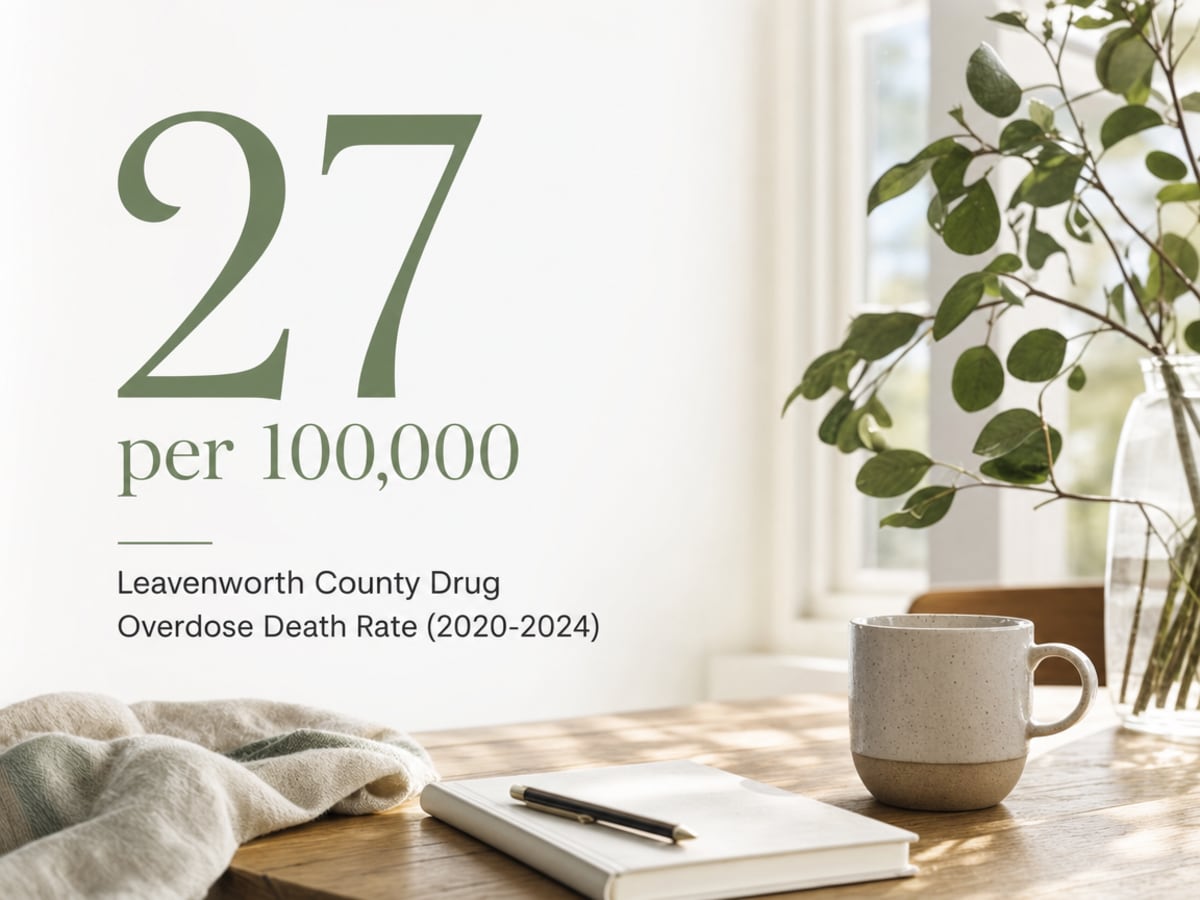
Here’s what you’re up against, and it isn’t your imagination. From 2020 through 2024, Leavenworth County recorded 114 drug overdose deaths, with a death rate of 27.0 per 100,000 residents — ranked 7th out of 105 Kansas counties and formally categorized as “Higher Rate than State” by the Kansas Department of Health and Environment 1. The county also ranks 16th of 105 on KDHE’s fatal overdose vulnerability index 6. That’s not a headline. That’s your neighborhood, your church parking lot, your kid’s high school friend group.
You probably knew the numbers were bad before you ever saw a chart. What the data actually tells you is this: what’s happening in your home is not a personal failing. It’s a public health emergency that has settled into Leavenworth County and hasn’t left. Families in Lansing, Basehor, Tonganoxie, and the civilian ring around Fort Leavenworth are all making versions of the same phone call tonight.
That doesn’t make the fear smaller. It does mean you don’t have to figure this out alone, and you don’t have to figure it all out before morning. The next page is about what’s actually available near you, and what to do next.
What Local Help Looks Like in Leavenworth County
The Providers Already on the Ground
You are not starting from zero. Leavenworth County has real behavioral health infrastructure, and it’s worth knowing the names before you make a call so you can tell them apart when you’re exhausted and someone is asking you to spell your insurance card out loud.
The county’s 2024 Sequential Intercept Model mapping report lays out the local landscape in plain terms 3. The Guidance Center (TGC) is the community mental health anchor and runs a 24/7 crisis helpline. Heartland Recovery Center, operated by Heartland RADAC, provides outpatient substance use treatment and counseling in Leavenworth itself. A Connecting Pointe offers additional recovery services in the area, and Sunflower Healing and Recovery (a separate local outpatient provider, not the residential center this article is about) offers SUD treatment and batterer’s intervention programming 3.
Every organization on this list does meaningful work. If your person is in crisis right now, TGC’s crisis line is the correct first phone call — before insurance questions, before any decision about where to go for longer-term care.
What that list also tells you, though, is what shape the local system takes. It’s built around crisis response and outpatient counseling. These are essential layers for a county. However, they’re not always sufficient when outpatient hasn’t been effective, when there’s a mental health diagnosis alongside substance use, or when staying in the same home environment perpetuates the relapse cycle.
Where the Local System Runs Out of Room
Here’s the honest gap. The Sequential Intercept report describes a county well-served by crisis lines and outpatient counseling, but thin on residential dual diagnosis beds inside county lines 3. If your loved one has tried outpatient once or twice and it hasn’t stuck, or if depression, PTSD, or an eating disorder is tangled up with the drinking or the pills, outpatient alone is often not enough — no matter how good the local clinicians are.
That’s not a criticism of anyone in Leavenworth. It’s just how community behavioral health is built almost everywhere. Residential care is expensive to run, tightly regulated, and clustered in a few regional hubs. Kansas licenses every residential SUD program and inspects them, and accreditation can stand in for some licensure requirements — but the state doesn’t require a Certificate of Need, which means beds tend to cluster where the population and referral patterns already are 5.
For a Leavenworth County family, that math usually shakes out one of two ways. You keep trying outpatient locally and hope the next round takes. Or you look south, past the county line, to a residential program that can hold your person for long enough to treat both the substance use and whatever is underneath it. Neither path is wrong. But if outpatient hasn’t worked yet, the second one is worth a serious look — and the drive is shorter than you’d think.
Why ‘Nearby’ Usually Means a Short Drive South
When you type “addiction treatment Leavenworth KS” into your phone, you’re really asking a logistics question. How far is too far? Can you visit? Can your person get there tomorrow if the answer is yes tonight?
For most Leavenworth County families who end up choosing residential care, “nearby” ends up meaning a drive south — usually toward the Kansas City metro corridor and and into east-central Kansas where residential programs cluster. That’s not because the drive is romantic. It’s because Kansas licenses residential SUD programs individually and doesn’t require a Certificate of Need, so beds tend to concentrate where the population and referral patterns already run 5. Leavenworth’s local system is strong on crisis response and outpatient counseling, which is exactly what the Sequential Intercept mapping shows 3. Residential dual diagnosis beds sit a little further out.
Here’s the reframe that helps most families. You are not leaving your community. You are borrowing a structured environment for 30 to 60 days — one that keeps your person out of the house where the triggers live, off the phone that keeps ringing, and in a place staffed around the clock. Sunflower Recovery is in Osawatomie, roughly an hour south of Leavenworth depending on traffic and where in the county you’re starting. That’s close enough that family programming, weekend visits, and discharge coordination back to Leavenworth-area outpatient providers all stay realistic.
If an hour sounds like a lot right now, ask yourself how many hours you’ve already spent this month waiting up, cleaning up, or refreshing a location app. The drive south is one of the shorter trips in this story. When you call admissions, you can ask them to walk you through what the first day looks like from a Leavenworth address — including who drives, what happens at intake, and what to tell your person on the way.
Why Residential Care, and Why Integrated Care
Completion Rates Are Not Marketing — They’re the Point
If outpatient hasn’t held, the question isn’t whether your person is trying hard enough. It’s whether the level of care matches what’s actually going on. And on that specific question, the evidence is unusually blunt.
Think about why that gap exists, and it starts to make sense. Outpatient asks someone to walk out of a therapy session and back into the exact house, phone, and friend group that were part of the problem. Residential care removes those variables for 30 to 60 days. It’s not about willpower. It’s about giving a nervous system that’s been in overdrive a chance to settle before it’s asked to make hard choices again.
That doesn’t mean outpatient is wrong for everyone. For a lot of people, it’s the right first move, and Leavenworth County has good outpatient options 3. But if you’re on round two or three of outpatient and the pattern keeps repeating, the completion data is telling you something. It’s not about trying harder in the same setting. It’s about a different setting.

What ‘Dual Diagnosis’ Actually Means for Your Person
Dual diagnosis is a clinical term for something you probably already suspect at home. It means the substance use is riding alongside something else — depression, anxiety, PTSD, an eating disorder, unresolved trauma from years ago or last month. The two problems feed each other. The drinking quiets the panic. The panic comes back louder when the drinking stops. And around it goes.
This matters because programs that treat only the substance use often leave the underlying condition untouched, and vice versa. A veterans-focused residential study of an integrated program (called I-ACT) found that 74.6% of participants completed the program, and the people who came in with both a substance use disorder and a mental health diagnosis actually had lower depression scores at discharge than the people who came in with substance use alone 7. That’s not the outcome you’d expect if the mental health piece were being ignored.
Sunflower Recovery is built around this reality. The clinical team treats the substance use and the trauma, depression, anxiety, or eating disorder in the same building, on the same treatment plan, by clinicians who talk to each other. That’s what “integrated” means in practice — not two separate programs stapled together, but one plan that assumes both things are real.
If your person has been told by a previous program that they need to “get sober first” before anyone will address the trauma, that sequence has largely fallen out of favor for good reason. Waiting to treat the thing that’s driving the drinking rarely holds.
What the Evidence Does and Doesn’t Promise
Here’s where honesty matters more than a sales pitch. Residential dual diagnosis care has strong outcomes, and it has real limits, and you deserve both halves of that picture before you make a call.
The strong side first. One study of residential dual diagnosis treatment tracked patients over 12 months and found that average alcohol intoxication days per month dropped from 16 to 2 — a 91% reduction — with 68% still in remission between months six and twelve 8. That’s a life-changing swing. Sixteen days a month is most of a person’s life. Two days a month is a bad weekend, not a way of being.
Now the limit. A 2023 systematic review of integrated versus non-integrated dual diagnosis treatment found that integrated care consistently improved psychiatric symptoms, but differences in substance use outcomes and treatment retention between the two models were often not statistically significant 10. Translation: integrated care is clearly better for the mental health side, and probably at least as good for the substance use side, but it’s not a guaranteed magic bullet. Nothing is.
What that means for you is this. A good residential program will help your person more than doing nothing, and more than another round of the same outpatient. It won’t erase what happened. It won’t hand you back the person you knew before. It will give them — and you — a real shot at a different next year. That’s worth the phone call.
The Practical Logistics Nobody Talks About
Who Feeds the Dog, and Other Real Questions
The clinical stuff is almost never what keeps a family stuck. What keeps you stuck is the dog. And the mail. And whether your kid’s school will excuse the absences, and who’s going to tell your mother, and whether the water bill is on autopay.
You’re not being shallow for thinking about this. You’re being a functional adult in an impossible week. Before your person leaves for 30 or 60 days, sit down with a piece of paper and write out the fixed things: pets, kids, work, house, car, phone, bills, medications, and any pending appointments. Then write down one name next to each item — the person you’ll ask to help. Sisters, neighbors, coworkers, church people. You don’t need one hero. You need eight people doing one thing each.
Pack light. Comfortable clothes for two weeks (laundry is available at most residential programs), a photo or two, a journal, and any prescribed medications in their original bottles. Leave the laptop, the pills that aren’t prescribed, and anything sharp or valuable. Admissions will give you a specific list when you call, and they’ve heard every question you’re embarrassed to ask.
What the Intake Call Sounds Like
The call is shorter and gentler than you’re picturing. You are not being interviewed. You’re being helped.
Whoever answers will ask a few basic things: who the person is, what they’re using, how much, how often, whether they’ve been to treatment before, and whether there’s a mental health diagnosis in the picture — depression, anxiety, PTSD, an eating disorder, anything a doctor has named. They’ll ask about physical health and current medications. If you’re the family member calling and your person isn’t in the room, that’s fine. Admissions can walk you through what to say to them.
They’ll also ask about insurance. Have the card in front of you if you have it, and don’t worry if you don’t — they can look things up. Then they’ll ask about timing. Sometimes a bed is available today. Sometimes it’s a few days out and they’ll help you plan safely for the gap.
You can hang up at any point. You can call back tomorrow. Calling is not a commitment. It’s a conversation with someone who does this every day and who is not going to be shocked by anything you say.
Insurance, Cost, and the Medicaid Question
Sunflower Recovery accepts most commercial insurance — the plan you get through an employer, or through the marketplace, or through a spouse’s job. When you call admissions, they’ll verify your benefits before you commit to anything, and they’ll tell you in plain numbers what your out-of-pocket share is likely to look like. Ask them to explain the deductible, the coinsurance, and the out-of-pocket maximum. You are allowed to ask twice if it doesn’t make sense the first time.
Here is the honest part. Sunflower does not participate in Medicare or Medicaid. If your person is on KanCare or another Medicaid plan, Sunflower is not the right fit for their coverage, and admissions will tell you that directly rather than string you along. That’s not a small thing to know up front.
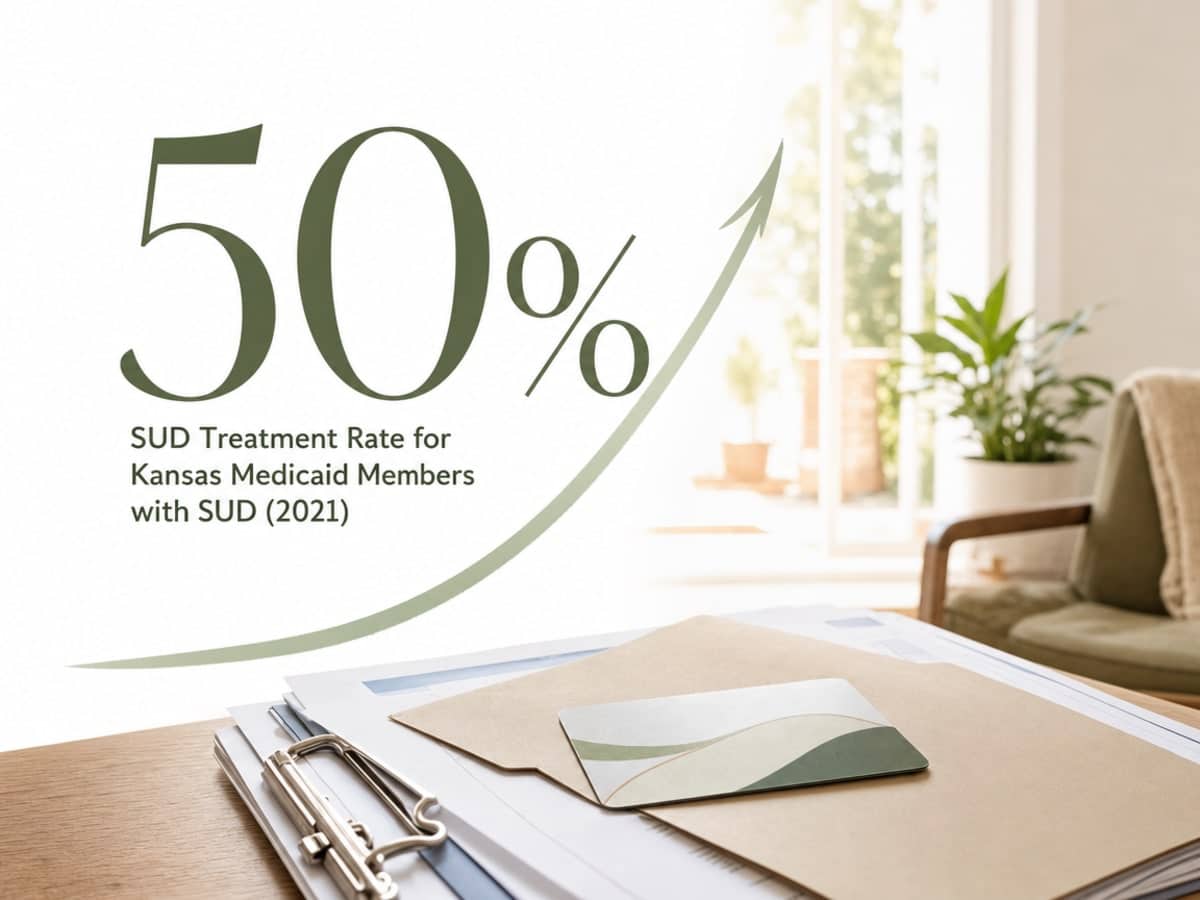
The good news for KanCare families is that Kansas has genuinely expanded residential SUD coverage in recent years — the state’s Medicaid demonstration reported the SUD treatment rate reaching 50% by 2021, with fewer 30-day readmissions 2. The Guidance Center and Heartland Recovery Center are appropriate first calls in that case 3.
A Note for the Military-Connected Community
Leavenworth County includes a lot of people who wear or have worn a uniform, plus the spouses, kids, and civilian coworkers who share their lives. Fort Leavenworth is part of the fabric here, and so are corrections officers, VA staff, and first responders. If that’s your household, know that a residential program off-post is an option worth asking about — separate from any on-base or VA-affiliated care your person may already be connected to. When you call Sunflower admissions, mention your situation. They can talk through insurance, confidentiality, and how a stay away from the local community might actually help.
How to Choose a Program Without Losing Another Week
You don’t have unlimited time, and you don’t need a perfect answer. You need a workable one.
Five questions will get you most of the way there:
- Is the program licensed in Kansas, and is it accredited? (Kansas requires licensure for every SUD program, and accreditation is a reasonable proxy for clinical rigor 5.)
- Does it treat mental health conditions in the same building as the substance use, with clinicians who share a treatment plan?
- Does it verify your insurance before you commit?
- Can it tell you, on the phone, roughly when a bed is available?
- Will it coordinate discharge back to a Leavenworth-area outpatient provider like The Guidance Center or Heartland Recovery Center 3 so your person isn’t dropped off a cliff at day 60?
If a program can answer those five questions clearly, you have enough to move. If it can’t, keep calling. You are allowed to interview more than one place in the same afternoon.
One more thing. The best time to make the call was probably last month. The second-best time is today, while the phone is already in your hand. Sunflower’s admissions line can walk you through what admission from a Leavenworth address looks like — no pressure, no commitment, just answers.
Start your recovery journey from Leavenworth today
Connect directly with admissions to discuss a safe, structured path forward—no judgment, just support.
Frequently Asked Questions
What should I pack for a residential stay if I’m coming from Leavenworth?
Comfortable clothes for about two weeks (laundry is available on-site), toiletries without alcohol in the first few ingredients, a journal, a book, and any prescribed medications in their original labeled bottles. Leave laptops, work devices, valuables, and anything sharp at home. Admissions will send you a specific list when you call — ask them, they’ve heard every question.
What happens if my person needs to detox before residential treatment?
Medical detox is a separate step that some people need first, especially with alcohol or benzodiazepines. When you call admissions, describe what your person is using and how much. If detox is needed, they’ll help you find a medical setting to stabilize safely, then coordinate the handoff into residential care. You are not expected to figure that sequence out alone.
How long is a typical residential stay, and can I visit?
Sunflower’s residential program runs up to 60 days, though the exact length is set by the clinical team based on what your person needs. Family programming and visits are part of the model, not an afterthought. From Leavenworth County, the drive south is reasonable for weekend visits and scheduled family sessions. Ask admissions about the current visit schedule and what to expect week by week.
What if we have Medicaid instead of commercial insurance?
Sunflower does not participate in Medicare or Medicaid, so if your person is on KanCare, Sunflower is not the right coverage fit. Admissions will tell you that directly. For KanCare families, The Guidance Center and Heartland Recovery Center in Leavenworth are appropriate first calls 3, and Kansas has expanded residential SUD coverage in recent years — the state’s SUD treatment rate reached 50% by 2021 2.
Can I call just to ask questions, or does calling mean we’re committing?
Calling is not a commitment. It’s a conversation. You can ask what admission looks like from a Leavenworth address, what insurance covers, what the first day is like, and whether your person is a fit — and then hang up and think about it. You can call back tomorrow, or next week. Admissions staff do this every day and are not going to pressure you.
What do we do about work, kids, and the house while they’re gone?
Write down the fixed things — pets, kids’ school pickup, work, bills, medications, the car — and put one name next to each. Employers often accept FMLA paperwork for treatment; the clinical team can help provide documentation. Schools can excuse absences confidentially. You don’t need one hero handling everything. You need several people each doing one small thing for the next 30 to 60 days.
References
- Drug Overdose Deaths in Kansas by County, 2020–2024. https://www.kdhe.ks.gov/DocumentCenter/View/55469/2020-2024-Map-of-Kansas-Overdose-Deaths-by-County-PDF?bidId=
- KanCare Section 1115 Demonstration: Interim Evaluation Report for SUD Component (Kansas). https://www.medicaid.gov/medicaid/section-1115-demonstrations/downloads/ks-kancare-appvd-int-eval-rpt-sud-01042023.pdf
- Sequential Intercept Model Mapping Report – Leavenworth County. https://files.leavenworthcounty.gov/Department/Community%20Corrections/2024-07-25–Report–KS-Leavenworth-County-%20FINAL.pdf
- Chapter 7 – Treatment Models and Settings for People With Co-Occurring Disorders (SAMHSA TIP). https://www.ncbi.nlm.nih.gov/sites/books/NBK571024/?report=reader
- Kansas Summary – State Residential Treatment for Behavioral Health Conditions. https://aspe.hhs.gov/sites/default/files/2021-08/StateBHCond-Kansas.pdf
- Kansas Fatal Drug Overdose Vulnerability Assessment. https://www.kdhe.ks.gov/DocumentCenter/View/59744/Kansas-Fatal-Drug-Overdose-Vulnerability-Assessment-PDF?bidId=
- The Individualized Addictions Consultation Team Residential Program. https://pubmed.ncbi.nlm.nih.gov/33583351/
- The Effects of Residential Dual Diagnosis Treatment on Alcohol Use and Psychiatric Symptoms. https://pmc.ncbi.nlm.nih.gov/articles/PMC5576155/
- Dually Diagnosed Patients’ Responses to Substance Use Disorder Treatment. https://www.ncbi.nlm.nih.gov/pmc/articles/PMC3292216/
- Integrated vs Non-integrated Treatment Outcomes in Dual Diagnosis: A Systematic Review. https://pmc.ncbi.nlm.nih.gov/articles/PMC10157410/