
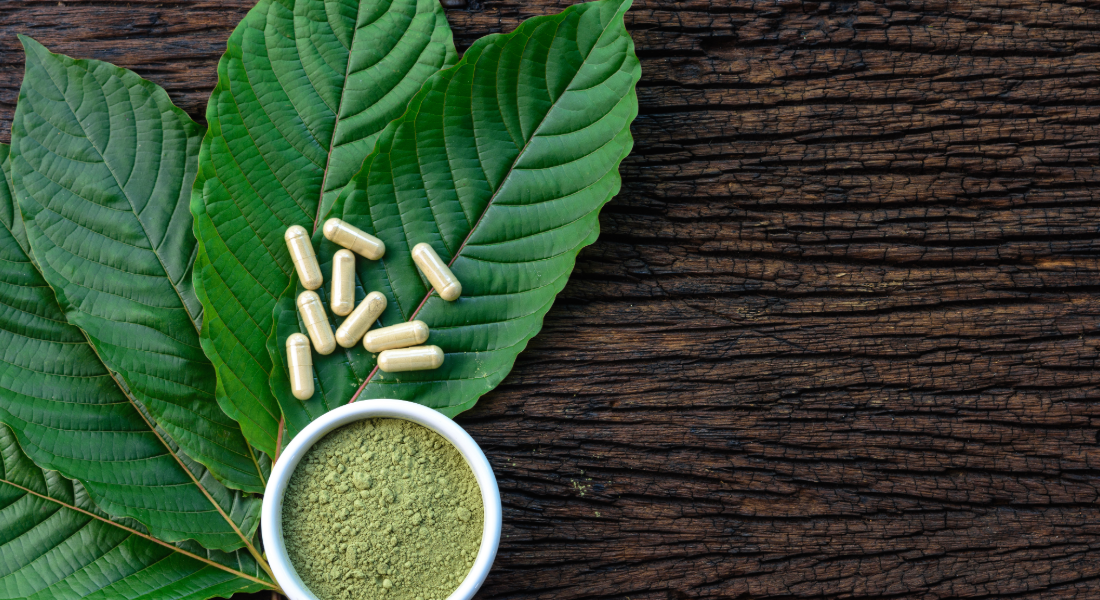

Picture someone who, five years ago, turned down an opioid prescription after back surgery because they had watched what those pills did to a sibling. They researched alternatives. They found kratom. They read the forums, started conservatively, managed their pain, kept their job, raised their kids. By every metric that American culture uses to measure a responsible adult, they were winning.
Over the years, their dosage increased and eventually they switched over to 7-OH. Today they are physically dependent on a product that they pick up at the gas station. Their hands shake when they run out and they are crippled by pain, nausea, insomnia, and extreme fatigue and anxiety.
This is a story about a healthcare system so broken that a gas station became the pharmacy, and a botanically-marketed opioid agonist became the responsible choice.
Opioids in Disguise
For generations, farmers in Thailand and Malaysia chewed kratom leaves to manage physical labor and fatigue. The dose was low, the form was whole-plant, and the cultural context was clear. Nobody was confused about what it was or what it did.
What arrived in the United States retained the botanical packaging while the chemistry evolved into something else entirely.
The key compound is not the one most people have heard of. Mitragynine, kratom's primary alkaloid, gets most of the attention. But mitragynine's metabolite, 7-hydroxymitragynine, is where the real pharmacological story lives. Research has confirmed that 7-OH binds to mu-opioid receptors at a potency estimated to be roughly 13 times greater than morphine by receptor affinity. Traditional kratom leaf contains only trace amounts of 7-OH. Then the market noticed.
By 2023, concentrated 7-OH products had proliferated across American gas stations, smoke shops, and online retailers. Gummies. Shots. Capsules. Extracts. Marketed with leaves and earthy fonts and language borrowed from the wellness industry. Sold without a pharmacist, without a physician, without a single question about what else the person was taking or what condition they were trying to manage.
A person consuming a high-dose 7-OH shot from a convenience store is, pharmacologically speaking, taking a concentrated opioid agonist. The leaf on the label isn’t a lie, it is a costume.
Does Kratom Cause Real Physical Dependence?
Yes. Full stop.
Repeated activation of mu-opioid receptors causes the brain to downregulate those receptors, a process of adaptation that produces tolerance and, over time, physical dependence.
When the substance is removed, the resulting withdrawal, anxiety, insomnia, muscle cramps, nausea, sweating, prolonged anhedonia, is a predictable neurobiological outcome, clinically indistinguishable from opioid withdrawal because the underlying mechanism is the same.
Kratom and 7-OH dependence is opioid use disorder.
Not a disorder that resembles opioid use disorder. Not a disorder that requires an opioid-informed approach. The same disorder, acting through the same receptors, responding to the same evidence-based interventions.
What Treatments Work for Kratom & 7-OH Dependence?
The treatments that work for opioid use disorder work for kratom and 7-OH addiction.
Buprenorphine is the most consistently effective pharmacological option. It manages acute withdrawal, reduces cravings, and allows the brain's opioid receptor system to stabilize. Providers with OUD experience can adapt standard protocols effectively for kratom and 7-OH presentations. The dose and timeline may differ. The mechanism does not.
Medically supervised tapering is appropriate for individuals whose use pattern and history supports it, always with clinical guidance.
Cold-turkey cessation without support produces high relapse rates in this population for the same reason it does in opioid use disorder: the neurobiological deficit does not resolve on willpower. It resolves on time and, when warranted, medication.
Behavioral treatment including cognitive behavioral therapy adapted for substance use disorders is a meaningful complement to pharmacological support, particularly for addressing the original reason the person started using kratom in the first place, whether that was pain, anxiety, fatigue, trauma, or something the healthcare system stopped treating.
Why Kratom Users Resists Treatment (And What to Do About It)
Most people who develop kratom or 7-OH dependence were actively trying to avoid opioid dependence. That is the psychological architecture of the whole condition. When someone who organized their identity around not being an opioid user discovers that their body is opioid-dependent, the cognitive dissonance is tough to reconcile.
Effective care holds the history: yes, you were trying to manage something real. Yes, the product was marketed as botanical. Yes, your nervous system adapted to it the way nervous systems adapt to opioids, because that is what it is. None of this is a failure on your part. It is a physiological state that responds to treatment.
What Is Post-Acute Withdrawal & How Long Does It Last?
Acute withdrawal from kratom and 7-OH typically resolves within one to two weeks. What follows is less dramatic and more dangerous: weeks to months of disrupted sleep, persistent anxiety, difficulty concentrating, and a low-grade emotional flatness that makes ordinary life feel stripped of meaning.
Patients who are not warned about this window interpret it as evidence that something is permanently wrong with them. That misread is one of the primary drivers of relapse.
Preparation changes the odds. Knowing the window exists, understanding its basis, and having support built specifically for it transforms a relapse trigger into a predictable process with a known endpoint.
Call Today
The gas station should never have been the pharmacy. That part belongs to a system failure, not a personal one. But the path forward is evidence-based, medically sound, and available. It looks a great deal like what works for opioid use disorder, because that is exactly what it is.
If you or someone you know is navigating kratom or 7-OH dependence in Kansas, medically supervised, evidence-informed treatment is available. You just have to make the call.